
Software development is undergoing its biggest transformation since the invention of version control. AI coding agents, autonomous systems that can plan, write, test, debug, and deploy code with minimal human intervention, are no longer a research concept. In 2026, they are actively being used by solo developers, startups, and Fortune 500 engineering teams alike. Unlike AI assistants that simply autocomplete lines of code, AI coding agents execute entire workflows. They can read your codebase, understand your goals, use tools like terminals and browsers, and iterate through multi-step tasks until the job is done. The shift from AI-assisted coding to agentic AI for coding is as significant as the shift from manual testing to automated CI/CD pipelines.
In this complete guide, you will learn exactly what AI coding agents are, how they work under the hood, which tools lead the market in 2026, where they deliver the most value, their real limitations, and how to use them safely and effectively. Whether you are a developer, a team lead, or a founder making technology decisions, this guide gives you everything you need to understand and leverage autonomous coding agents.
What Are AI Coding Agents?
An AI coding agent is an advanced artificial intelligence system capable of autonomously planning, writing, testing, and debugging entire software features with minimal human intervention.
Unlike standard code completion autocomplete features, these agents understand complete codebases, allowing them to solve complex engineering problems and execute multi-step development workflows completely on their own.
Definition of an AI Coding Agent
An AI coding agent is an autonomous software system powered by a large language model (LLM) that can independently plan and execute complex programming tasks. Unlike a simple code suggestion tool, an AI coding agent operates as a goal-driven actor. It receives a high-level objective, breaks it into steps, uses external tools such as a terminal, file system, or web browser, and works iteratively until the goal is achieved.
The term “agent” is key. In artificial intelligence, an agent is any system that perceives its environment, makes decisions, and takes actions to achieve a goal. An AI coding agent perceives your codebase and task requirements, decides on a strategy, and acts by writing code, running commands, reading documentation, and fixing errors all autonomously.
In practical terms, you might tell an AI coding agent: “Add user authentication to this Express.js application, write the tests, and update the README.” The agent will execute that entire sequence without you needing to break it into individual steps.
AI Assistant vs AI Coding Agent
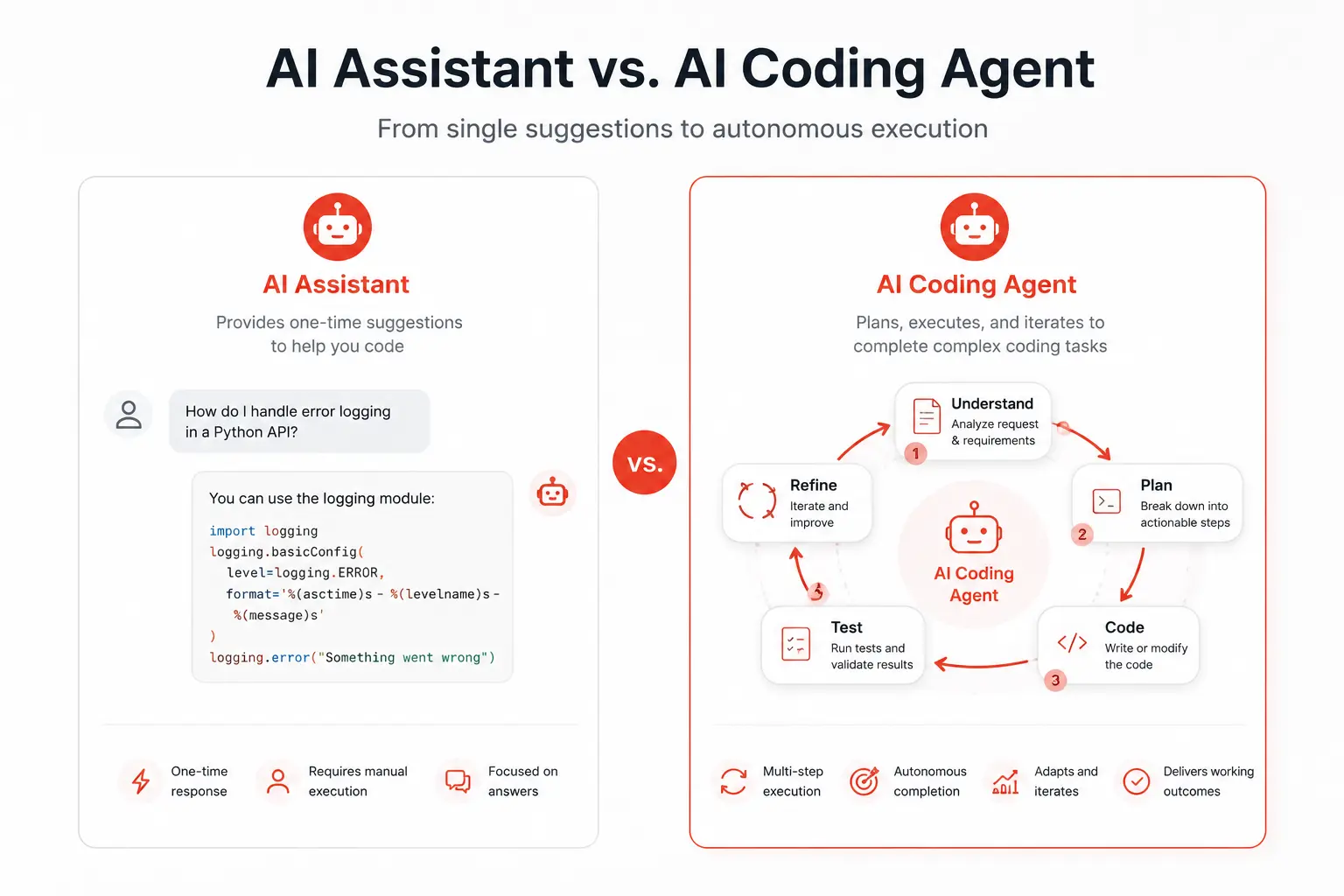
The distinction between an AI coding assistant and an AI coding agent is fundamental, and confusing the two leads to misaligned expectations.
An AI coding assistant (like the original GitHub Copilot) is a reactive tool. You write code, and it suggests the next line or block. You are always in control of every step. The assistant responds to your cursor position and context, but it does not initiate actions, run code, or make decisions beyond the immediate suggestion. Think of it as autocomplete with deep programming knowledge.
An AI coding agent, by contrast, is proactive and goal-driven. You give it an objective, not a line-by-line instruction, and it figures out how to achieve that objective. It can open files, execute terminal commands, run test suites, read error messages, search documentation, and loop back to fix problems it encounters.
| Feature | AI Coding Assistant | AI Coding Agent |
|---|---|---|
| Input | Code context + cursor position | High-level goal or task description |
| Output | Code suggestion | Completed multi-step task |
| Tool use | None | Terminal, browser, file system, APIs |
| Autonomy | Low – human drives every step | High – agent drives execution |
| Error handling | None | Self-corrects through iteration |
Core Characteristics of Agentic Development
What separates a true autonomous coding agent from a feature-rich chatbot? Several core characteristics define the agentic approach to software development:
- Goal-oriented execution: The agent works toward an outcome, not just a response. It keeps acting until the goal is reached or it encounters an unresolvable blocker.
- Tool use: Agents can call external tools running shell commands, reading and writing files, querying APIs, browsing documentation, giving them real interaction with the development environment.
- Planning: Before acting, a well-designed agent creates a plan, sequences steps logically, and adapts when circumstances change.
- Memory: Agents maintain context across their task, remembering what they have done, what worked, and what failed, rather than treating each action in isolation.
- Self-correction: When code fails a test or a command returns an error, the agent reads the error output and attempts to fix the problem autonomously.
- Multi-step execution: Tasks that would require dozens of manual actions from a human developer can be completed in a single automated workflow.
These characteristics together define what researchers and practitioners call agentic AI for coding a new paradigm that is fundamentally changing how software gets built.
How AI Coding Agents Work
AI coding agents work by parsing your entire codebase to understand its architecture, dependencies, and logic before breaking down your prompt into a structured, step-by-step execution plan.
Goal-Based Execution
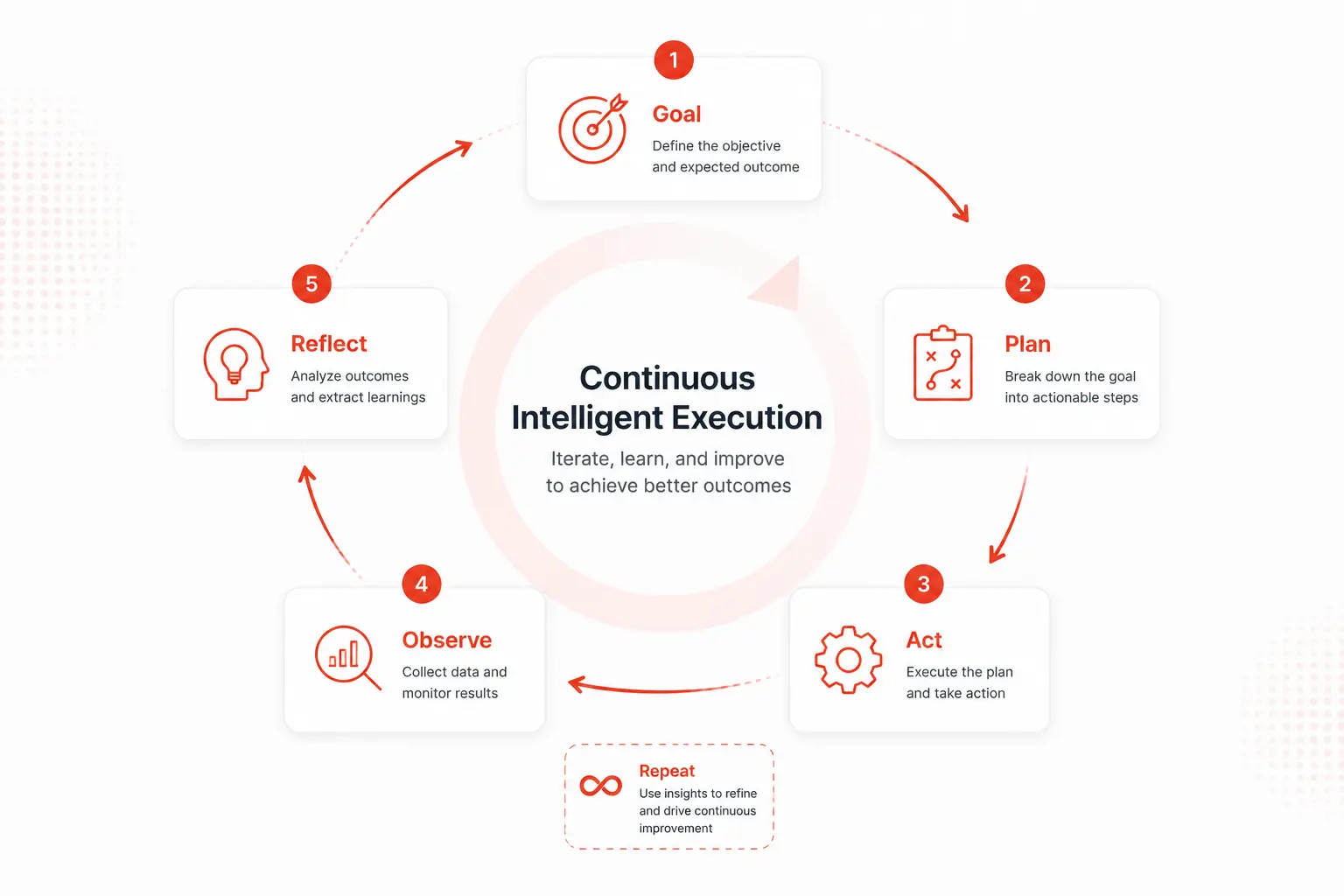
Every AI coding agent session begins with a goal, a natural-language description of what needs to be accomplished. This goal-based model is what makes agents fundamentally different from all prior developer tooling. The agent interprets the goal, decomposes it into sub-tasks, and begins executing. Unlike a script that follows a fixed sequence, the agent dynamically determines what needs to happen next based on the current state of the codebase and the results of its previous actions.
The quality of the goal description matters enormously. A well-specified goal with relevant context produces far better results than a vague instruction. This is why prompt engineering for coding agents has become its own discipline in 2026.
Planning Systems
Before executing actions, sophisticated AI coding agents generate an explicit plan. This planning phase involves breaking the high-level goal into a sequence of concrete, executable steps. Some agents show this plan to the user before proceeding, while others plan internally and execute immediately.
Planning systems in modern AI software engineering agents draw on techniques like chain-of-thought reasoning, tree-of-thought search, and ReAct (Reasoning + Acting) frameworks. These allow the agent to reason about which approach is most likely to succeed before committing to a sequence of actions, reducing wasted effort and improving overall task completion rates.
Understanding Agent Planning Systems
Tool Usage
Tools are what give AI coding agents their power to act in the real world. Without tool access, an LLM can only generate text. With tools, it can execute code, modify files, run tests, install packages, query databases, and browse the internet.
Common tools used by AI development agents include:
- File system tools: Read, write, create, and delete files and directories
- Terminal/shell tools: Execute commands, run scripts, install dependencies
- Code execution tools: Run code snippets and capture output or errors
- Search tools: Search within the codebase or on the web
- Browser tools: Navigate web pages, read documentation, interact with web apps
- Version control tools: Stage, commit, push, and manage branches in Git
AI Agent Tool Calling Explained
Memory Systems
Memory allows an agent to maintain a coherent context across a long, multi-step task. AI coding agents use several forms of memory:
- In-context memory: Everything in the active context window the current conversation, code snippets, tool outputs, and observations
- External memory: Files, databases, or vector stores where the agent saves and retrieves information that exceeds the context window
- Episodic memory: A log of actions taken and results observed during the current session, enabling the agent to avoid repeating mistakes
Managing memory efficiently is one of the biggest engineering challenges in building production-grade autonomous coding agents. As codebases grow, keeping the right information in context without exceeding token limits requires sophisticated retrieval and summarization strategies.
Self-Correction Loops
One of the most impressive capabilities of modern AI coding agents is their ability to self-correct. When the agent runs a test and it fails or executes a command that returns an error, it does not simply stop. Instead, it reads the error output, diagnoses the problem, generates a fix, applies it, and retests, repeating this loop until the tests pass or it determines it cannot solve the problem autonomously.
This self-correction loop dramatically reduces the need for human intervention in routine debugging. Benchmarks from 2025–2026 show that state-of-the-art coding agents can resolve 40–70% of real-world GitHub issues autonomously, with self-correction accounting for a significant share of that capability.
Multi-Step Task Execution
Real software development rarely involves a single, isolated action. Implementing a feature might require modifying a database schema, updating API endpoints, writing business logic, adjusting frontend components, creating unit tests, updating integration tests, and revising documentation, all in the correct sequence. AI coding agents are designed for exactly this kind of multi-step, interdependent task execution.
Evolution of AI Coding Tools
The evolution of AI coding tools began with basic, pattern-based inline autocomplete and line-by-line code completion engines that helped developers type faster.
GitHub Copilot Era
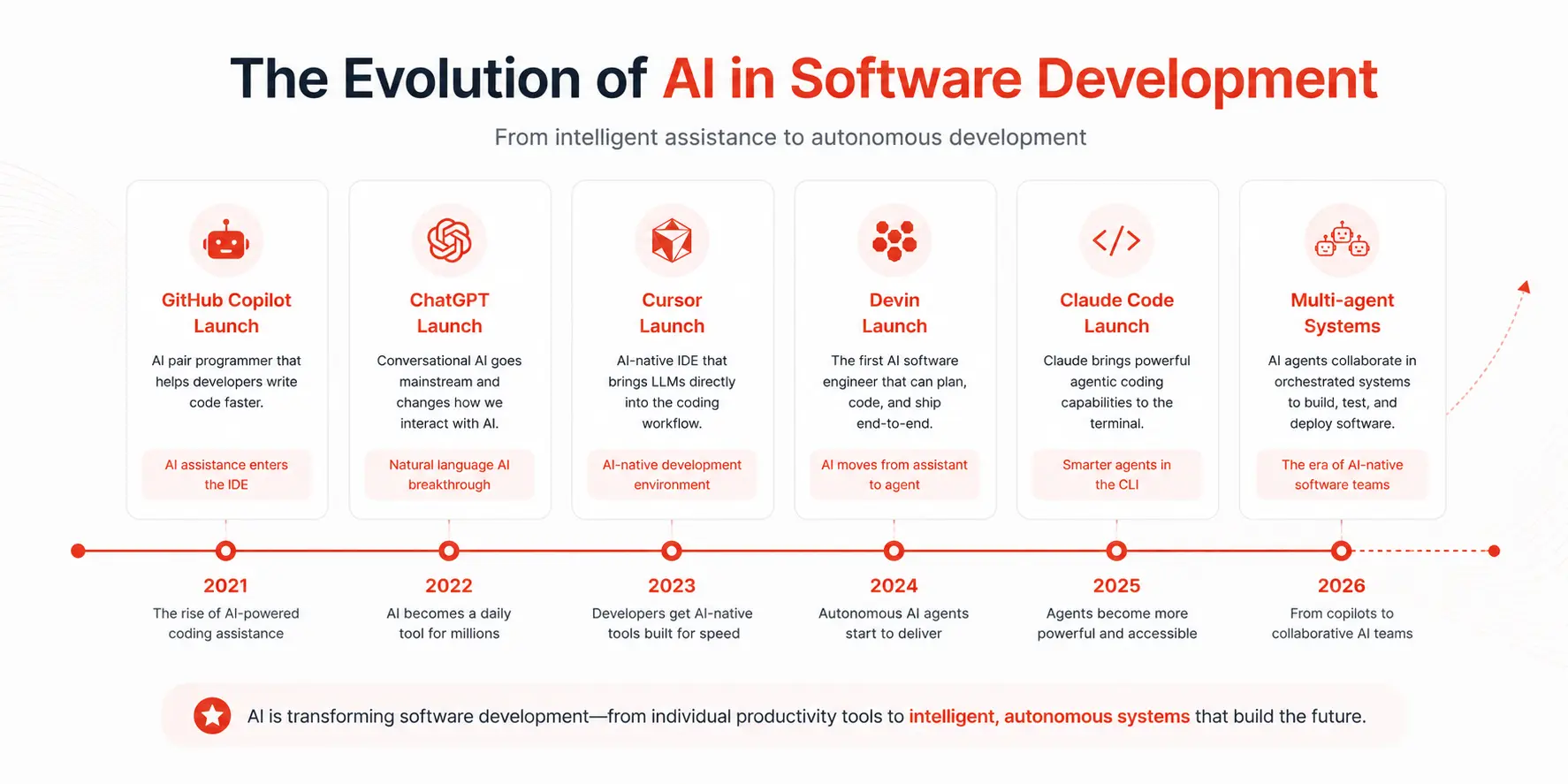
The modern era of AI-assisted coding began in June 2021 when GitHub launched Copilot, powered by OpenAI’s Codex model. Copilot introduced millions of developers to the idea that an AI could suggest entire functions, not just variable names. It was transformative productivity studies showed developers completing tasks up to 55% faster with Copilot’s assistance. But Copilot was fundamentally an autocomplete tool. The developer remained entirely in control of every decision.
GitHub Copilot vs Modern Coding Agents
AI Pair Programming
The next evolution introduced conversational AI pair programming tools like early ChatGPT integrations and Cursor’s chat mode, where developers could describe a problem in natural language and receive code blocks in response. This felt more collaborative and could handle slightly more complex, multi-part answers. Still, the developer remained responsible for integrating each code block correctly. The gap between “generating code” and “building software” remained wide.
Agentic Coding Revolution
The agentic revolution began in earnest in 2024, when tools like Devin AI demonstrated for the first time that an AI agent could be given a software engineering task and complete it end-to-end, including spinning up environments, writing code, running tests, and debugging failures without continuous human guidance. Devin’s launch was a watershed moment that sparked a wave of investment and development across the industry.
Autonomous Development Agents
By 2026, autonomous development agents will not be experimental; they will be production tools used by professional software teams. Agents like Claude Code, Cursor Agent, and Devin 2.0 can handle entire features, refactor legacy systems, generate comprehensive test suites, and manage multi-file changes across large codebases. The question is no longer “can AI agents code?” but “how do we integrate them effectively into our engineering workflow?”
Architecture of Modern AI Coding Agents
The architecture of a modern AI coding agent consists of a central LLM “brain” augmented by specialized layers for long-term memory, planning modules, and an orchestrator that coordinates complex workflows.
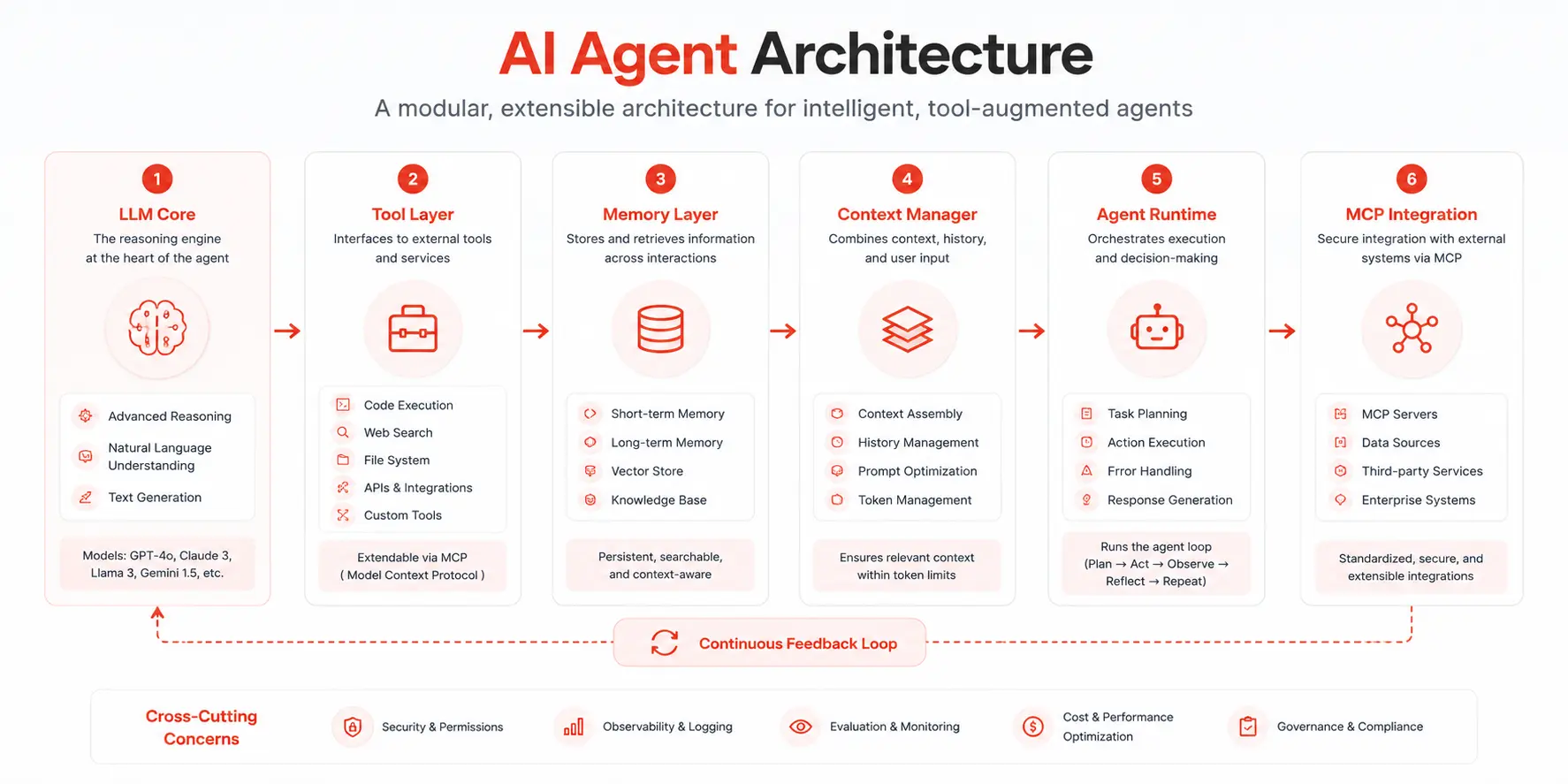
Large Language Models
At the core of every AI coding agent is a large language model. The LLM is the reasoning engine; it understands natural language instructions, comprehends code across dozens of programming languages, generates new code, interprets error messages, plans sequences of actions, and decides which tools to use. In 2026, leading models powering coding agents include Anthropic’s Claude 3.7 Sonnet and Claude 4 Opus, OpenAI’s GPT-4o and o3, Google’s Gemini 2.0 Ultra, and open-source models like Qwen2.5-Coder.
Tool Layer
The tool layer provides the agent with the ability to interact with the real world. Tools are defined as callable functions that the agent’s LLM generates a structured call specifying the tool name and parameters, the agent runtime executes that call, and the result is returned to the LLM as an observation. The richness of available tools and the reliability of their execution are major differentiators between competing agent platforms.
Memory Layer
Modern agent architectures implement hierarchical memory: short-term (in-context), medium-term (scratchpad files written to disk during a task), and long-term (persistent vector databases for cross-session knowledge). Some advanced agents implement semantic retrieval when the codebase is too large to fit in context. The agent embeds code chunks and retrieves the most relevant files using similarity search.
Context Management
Context management is arguably the hardest practical problem in agent engineering. LLMs have finite context windows; even the largest (1–2 million tokens in 2026) can be overwhelmed by large codebases. Effective context management involves deciding what to include at each step: which files are relevant, which prior actions matter, and which error messages need visibility. The best agents in 2026 use dynamic context compression, intelligent file retrieval, and structured task logs to manage this challenge.
Agent Runtime
The agent runtime is the orchestration layer that runs the agent loop: receive goal → generate plan → execute action → observe result → update state → repeat. It handles tool calling, manages timeouts and errors, enforces safety constraints, logs all actions, and determines when a task is complete or has hit an unresolvable failure. Runtimes vary significantly; some are simple linear executors; others support branching, parallel sub-agents, and rollback mechanisms.
MCP Integration
The Model Context Protocol (MCP), originally developed by Anthropic and now widely adopted across the industry, has become the standard interface for connecting AI agents to external tools and services. MCP defines a universal protocol for exposing tools, resources, and prompts to AI agents, regardless of the underlying model or agent framework. MCP integration means an AI coding agent can connect to virtually any development tool, GitHub, Jira, Slack, databases, cloud providers, and testing frameworks through standardized MCP servers.
Key Features of AI Coding Agents
What makes an AI coding agent truly disruptive is its transition from a passive, prompt-and-response chatbot to an active, goal-oriented engineering collaborator. These platforms are defined by five core structural capabilities that allow them to operate independently inside real-world production repositories.
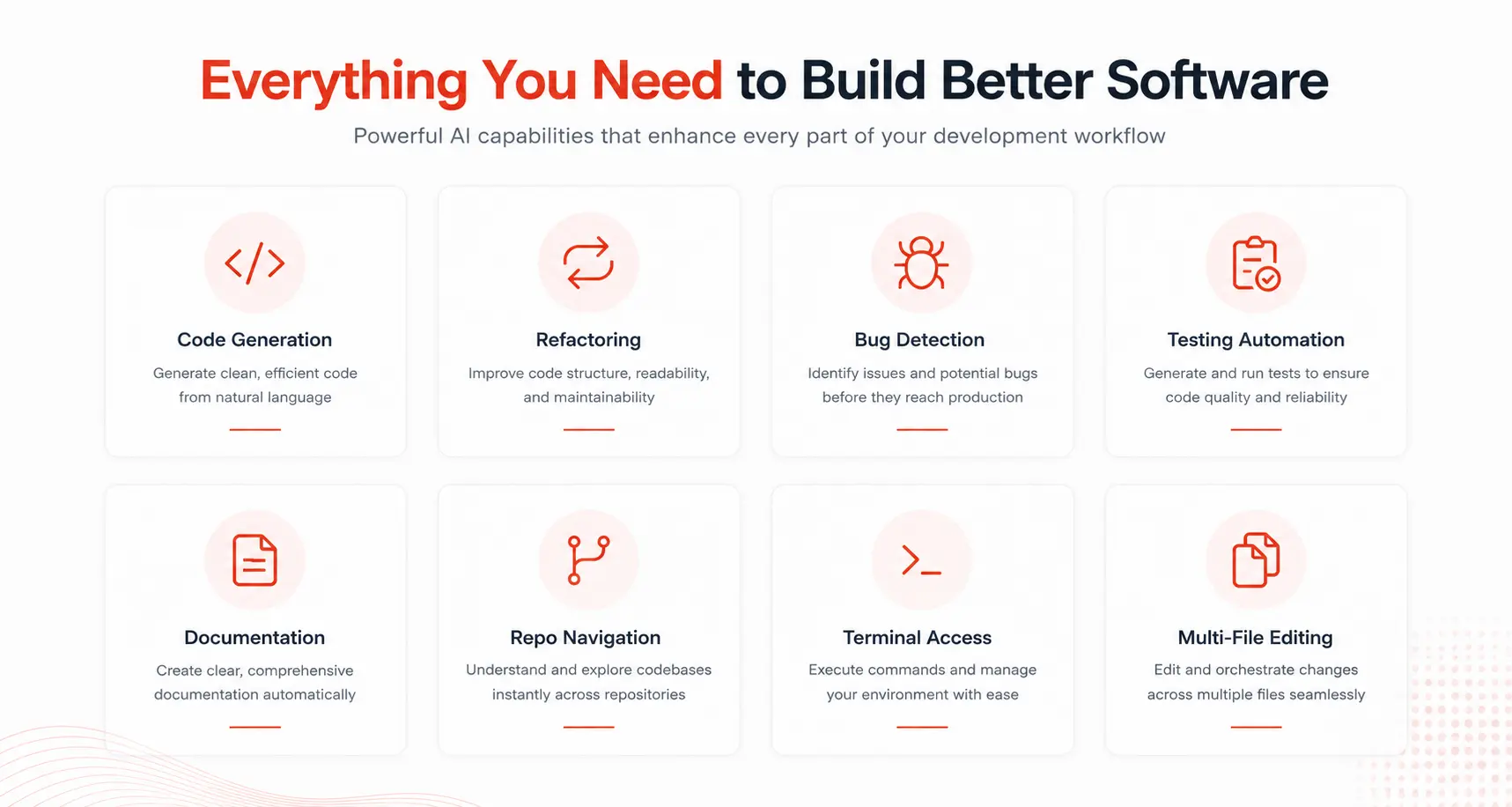
Code Generation
Code generation is the foundational capability of any AI coding agent. Modern agents go far beyond generating individual functions; they can scaffold entire modules, implement complex algorithms, generate boilerplate for frameworks, and produce code that integrates correctly with the existing patterns in your codebase. The best agents in 2026 adapt their coding style to match your project’s conventions rather than producing generic output.
Code Refactoring
Refactoring, restructuring existing code to improve readability, performance, or maintainability without changing behavior is one of the highest-value applications of AI coding agents. An agent can analyze an entire module, identify patterns that should be abstracted, rename variables for clarity, split large functions into smaller ones, and update all call sites automatically. Tasks that would take a senior developer hours can be completed in minutes.
Best AI Tools for Code Refactoring
Bug Detection
AI coding agents can perform deep static analysis of code, identifying not just syntax errors but subtle logical bugs, race conditions, null pointer risks, off-by-one errors, and security vulnerabilities. Unlike traditional static analysis tools that apply fixed rules, agents reason about code semantics and can identify bugs that require understanding the code’s intent, something that rule-based tools cannot do.
Testing Automation
Writing tests is one of the most time-consuming and often neglected parts of software development. AI coding agents can automatically generate comprehensive test suites: unit tests for individual functions, integration tests for modules, and end-to-end tests for user flows. They can read existing tests to understand your testing patterns, generate edge cases that human developers might miss, and update tests when code changes break them.
How AI Agents Write Unit Tests
Documentation Creation
AI coding agents can generate inline comments, docstrings, README files, API documentation, and architectural overviews, all derived directly from the actual code, not from guesswork. This ensures documentation stays aligned with the codebase and reduces the burden on developers to write it manually.
AI Documentation Generation Tools
Repository Navigation
For large codebases with thousands of files, simply understanding where relevant code lives is a challenge. AI coding agents can navigate repositories intelligently, understanding project structure, finding relevant files based on semantic meaning, tracing call chains across modules, and building a coherent model of how the system fits together before making changes.
Terminal Access
Direct terminal access is what separates truly autonomous agents from sophisticated chat interfaces. With terminal access, an agent can install dependencies, run build processes, execute test suites, spin up development servers, manage environment variables, and interact with version control, performing the complete operational workflow of a working developer.
Multi-File Editing
Real-world features almost always require changes across multiple files. A new API endpoint might require changes to route definitions, controller logic, data models, validation schemas, tests, and API documentation. AI coding agents can plan and execute these coordinated multi-file changes atomically, understanding the dependencies between files and making all necessary modifications in the correct order.
Popular AI Coding Agents in 2026
The developer landscape is dominated by a powerful mix of IDE-integrated systems and autonomous command-line powerhouses.
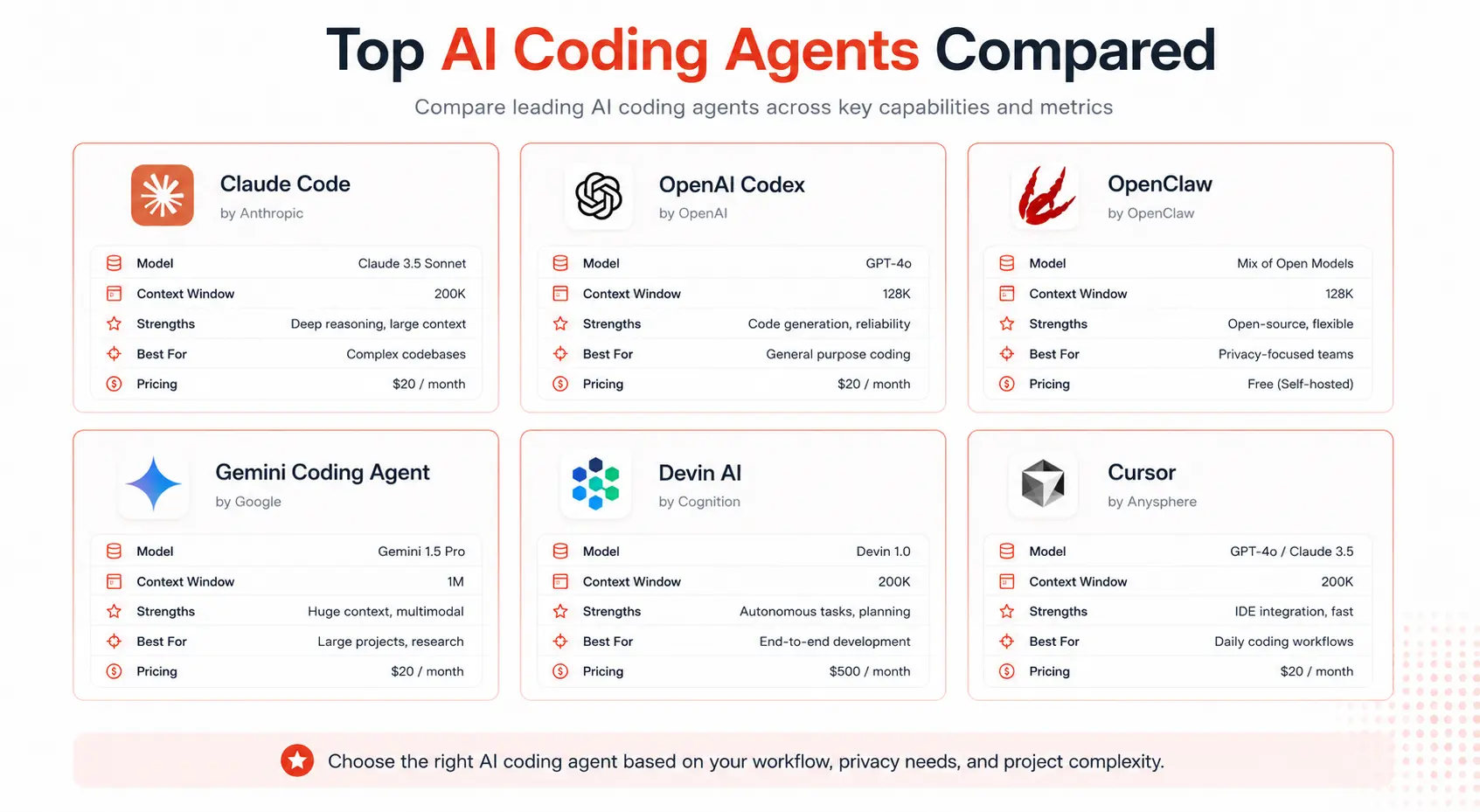
Claude Code
Claude Code, developed by Anthropic, is a command-line AI coding agent that runs directly in your terminal. It integrates Claude’s flagship models, including Claude 3.7 Sonnet, with extended thinking into a developer-native interface. Rather than a GUI, Claude Code operates through natural language commands in the shell, making it feel like a highly capable colleague you can pair-program with in your existing workflow.
Claude Code’s strengths lie in its reasoning quality and its ability to handle complex, multi-step engineering tasks with minimal hallucination. It has native Git integration, supports reading and writing files across the full project structure, and can run arbitrary shell commands. Its extended thinking mode is particularly valuable for architectural decisions and debugging complex systems. The agent reasons through multiple approaches before acting, showing its work at each step.
Claude Code supports the full MCP ecosystem, allowing it to connect to hundreds of external tools and services. It is particularly popular with developers who value control and transparency. Claude Code explains its reasoning at each step and asks for confirmation before executing irreversible actions. Pricing is usage-based through the Anthropic API.
Claude Code Review – Full Guide
OpenAI Codex
OpenAI Codex (the 2025/2026 agent iteration, distinct from the original 2021 Codex model) is OpenAI’s fully autonomous cloud-based coding agent, integrated into the ChatGPT and API ecosystem. It runs in isolated sandboxed environments, meaning it can execute code and manage dependencies without any risk of affecting a developer’s local machine.
Codex’s cloud-native architecture is a key differentiator, as tasks can run asynchronously in the background, and multiple tasks can run in parallel. This makes it well-suited for teams that want to delegate multiple development tasks simultaneously. It supports GitHub integration, allowing it to read pull requests, create branches, and push code directly. Codex benefits from OpenAI’s o3 reasoning model for complex multi-step planning, and its performance on SWE-Bench has been among the best in class.
OpenAI Codex Agent Guide – Full Review
OpenClaw
OpenClaw is an emerging open-source AI coding agent framework that gained significant traction in 2025 as developers sought more control and transparency over their agentic workflows. Unlike commercial products, OpenClaw is fully customizable. Developers can configure the underlying LLM, define custom tool sets, adjust the planning and memory systems, and self-host the entire stack.
OpenClaw’s biggest appeal is privacy and cost control. For organizations that cannot send their codebase to third-party AI providers, OpenClaw allows local deployment with open-source models. The project has a large and active contributor community, with integrations for VS Code, JetBrains IDEs, and direct CLI usage. It supports MCP natively, making it interoperable with the broader agent tooling ecosystem.
OpenClaw Review – Open Source AI Coding Agent
Gemini Coding Agent
Google’s Gemini Coding Agent, powered by Gemini 2.0 Ultra, is deeply integrated into the Google developer ecosystem, including Android Studio, Google Cloud, Firebase, and Project IDX. For teams already building within Google’s stack, Gemini’s native integrations provide a seamless experience that competing agents cannot match.
Gemini’s most notable technical advantage is its extended context window up to 2 million tokens, which allows it to ingest entire large codebases in a single context and reason across them without relying on retrieval mechanisms. This reduces errors that arise from incomplete context and makes it particularly effective for understanding and modifying complex, interconnected systems. Gemini Coding Agent also benefits from Google’s Vertex AI infrastructure, offering enterprise-grade security and compliance certifications.
Devin AI
Devin, built by Cognition Labs, was the original fully autonomous AI software engineer that captured the industry’s attention in early 2024. Devin 2.0, released in 2025, significantly improved upon the original’s real-world performance and introduced collaborative features that allow human developers to work alongside Devin in real time.
What distinguishes Devin from most competitors is its complete, purpose-built development environment. Devin has its own browser, terminal, code editor, and internet access. It can look up documentation, read Stack Overflow answers, install tools, and interact with web-based interfaces. This makes it one of the most autonomous agents available, capable of handling tasks that require external research beyond the codebase. Devin 2.0 is subscription-based with an enterprise pricing model.
Devin AI Review – Is It Worth It in 2026?
Cursor Agent
Cursor began as an AI-enhanced IDE fork of VS Code, but its Agent mode has evolved it into one of the most popular AI coding agent experiences for individual developers. Cursor Agent runs directly inside the IDE, giving it full access to the developer’s project while maintaining the familiar VS Code interface they already work in.
Cursor Agent’s key strength is its tight IDE integration; it can see exactly what files are open, what the developer is looking at, and what changes have been made, creating a deeply contextual experience. It supports multiple underlying models (GPT-4o, Claude 3.7 Sonnet, Gemini), allowing developers to choose the best model for each task. Cursor is subscription-based with a free tier and is particularly popular for full-stack web development workflows.
Real-World Use Cases for AI Coding Agents
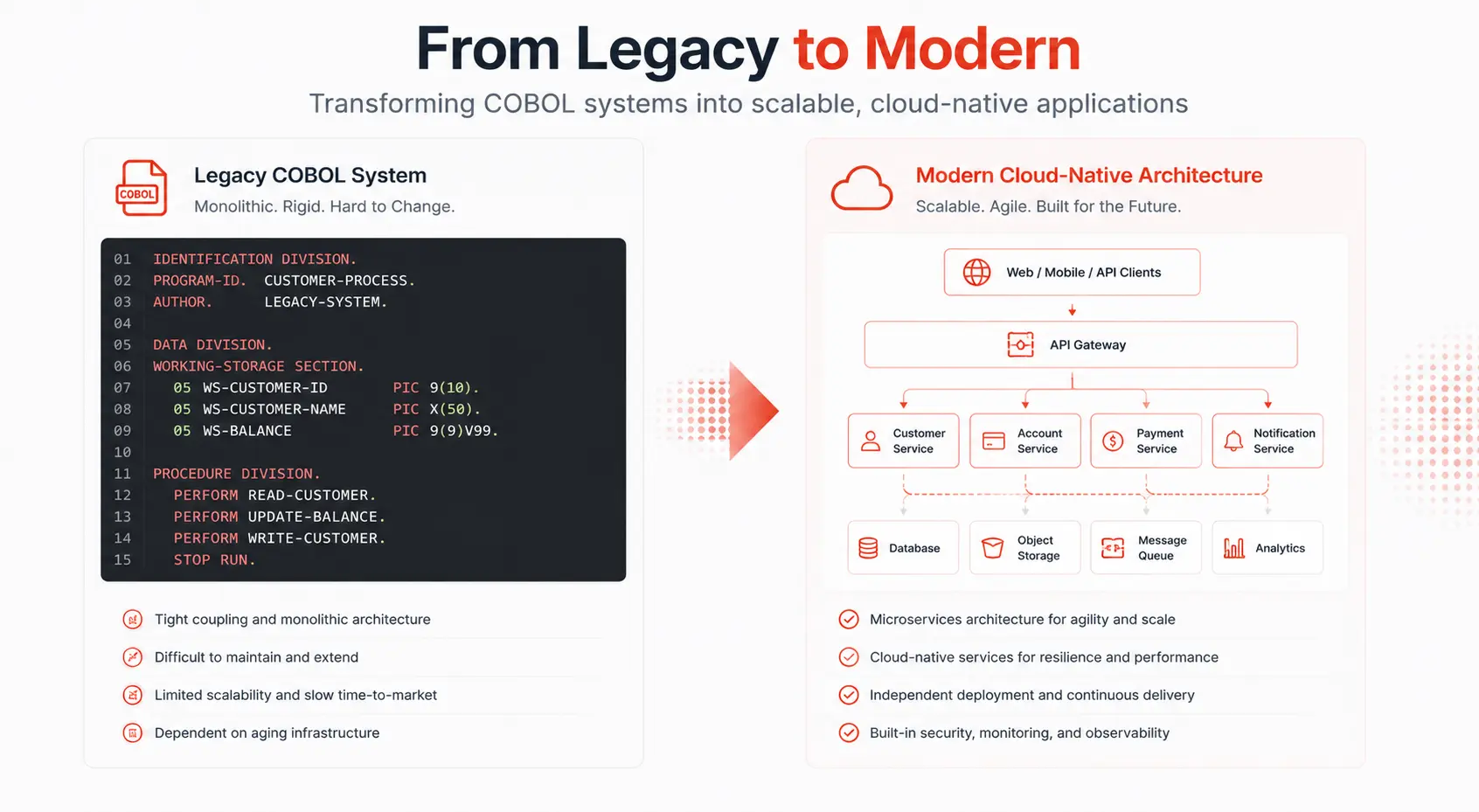
Real-world engineering teams deploy AI coding agents to rapidly execute repetitive or complex tasks, such as migrating entire production legacy codebases to modern framework architectures. Furthermore, these systems excel at scanning expansive repositories to identify security vulnerabilities, automatically spinning up isolated sandbox testing environments to write, verify, and push localized bug fixes.
Building Full Applications
Perhaps the most dramatic use case is building complete small-to-medium applications from scratch. In 2026, experienced developers routinely prompt AI coding agents to scaffold entire projects, including database schema, backend API, authentication system, and basic frontend in hours rather than days. The developer reviews, refines, and extends the generated foundation. This approach does not eliminate the need for skilled engineers; it eliminates tedious groundwork and lets engineers focus on product decisions and complex logic.
Legacy Code Modernization
Legacy code modernization is one of the highest-ROI applications of AI coding agents in enterprise settings. Organizations sitting on millions of lines of COBOL, PHP 5, or early Java can use agents to systematically analyze legacy systems, understand their behavior, and translate them into modern languages and frameworks. What previously required a specialized team and years of work can now be approached incrementally using AI agents with human review at each stage to ensure correctness.
Using AI Agents for Legacy Code Modernization
Debugging Complex Systems
Complex bugs in distributed systems, race conditions, subtle state management errors, and intermittent failures are among the most time-consuming problems in software development. AI coding agents excel here because they can systematically trace execution paths, analyze logs, read error messages, and test hypotheses iteratively. Developers report significant time savings on bug investigation tasks when pairing with agents, particularly for bugs that span multiple services or files.
Automated Testing
Teams using AI coding agents for test generation report dramatically improved test coverage without proportional increases in developer time. Agents can analyze code paths, generate edge case scenarios, and produce tests in the project’s established testing framework and style. They can also identify untested code paths and prioritize test creation where coverage is lowest, a task that is tedious for humans but straightforward for agents.
AI-Powered Software Testing Guide
CI/CD Assistance
AI coding agents are increasingly integrated into continuous integration and continuous delivery pipelines. When a build fails, an agent can be triggered automatically to analyze the failure, diagnose its cause, propose a fix, and create a pull request with the correction. This can reduce the feedback loop from hours to minutes, keeping development velocity high and reducing the cognitive load of monitoring and maintaining CI/CD pipelines.
Documentation Generation
AI coding agents can be run as part of the commit process to automatically update docstrings, READMEs, and API documentation when code changes. This produces documentation that is always accurate, without requiring developers to remember to update it manually, solving one of the oldest problems in software engineering. Organizations that adopt this practice consistently report higher documentation quality and developer satisfaction.
Benefits of AI Coding Agents
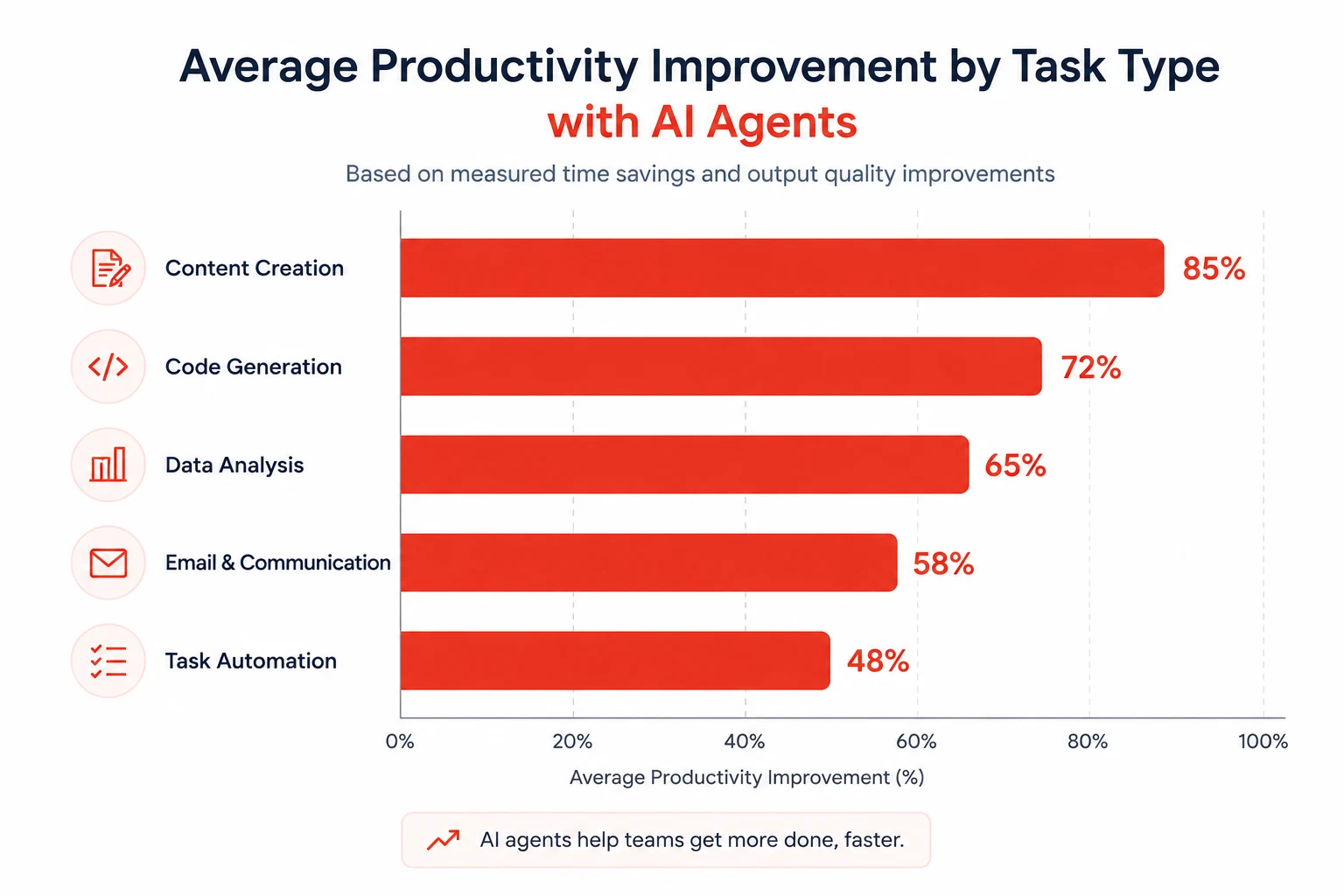
AI coding agents can dramatically accelerate software development by automating repetitive tasks, generating code, and assisting with debugging. They help developers focus on architecture, problem-solving, and innovation rather than routine implementation work.
Faster Development
The most immediately measurable benefit is speed. Studies from 2024 and 2025 consistently show that developers using AI coding agents complete tasks 30–80% faster, depending on the task type. Routine implementation tasks, building CRUD APIs, writing form validation, and setting up authentication see the largest speed improvements because agents handle these with high accuracy and minimal iteration.
Reduced Repetitive Work
Much of a software developer’s day is spent on repetitive, low-cognitive-demand work: writing boilerplate, adding error handling, and generating similar tests for similar functions. AI coding agents eliminate most of this work, allowing developers to spend their time on the genuinely difficult problems that require human creativity and judgment.
Better Documentation
When AI coding agents are part of the development workflow, documentation quality typically improves significantly, not because the agents produce better prose than humans, but because they produce documentation consistently. Every function gets a docstring, every API endpoint gets documented, and every significant decision gets a comment. Consistency at scale is something AI agents do far better than humans working under deadline pressure.
Improved Testing
Test coverage improves measurably when AI agents handle test generation. Teams report moving from 40–50% test coverage to 70–85% after deploying coding agents for test creation, with the improvement sustained over time because the agents continue generating tests for new code as it is written.
Knowledge Sharing
AI coding agents carry knowledge of best practices, design patterns, security considerations, and framework APIs that individual developers may not have. When an agent generates code, it tends to apply current best practices using modern async patterns, avoiding deprecated APIs, applying appropriate error handling, and distributing knowledge across the team without requiring explicit training.
Smaller Team Efficiency
Perhaps the most transformative benefit for startups and small companies is the ability to do more with fewer people. A team of three developers with well-integrated AI coding agents can maintain and expand a product that previously required a team of eight. This compression of team size requirements is reshaping hiring decisions and business models across the software industry.
Limitations and Risks of AI Coding Agents
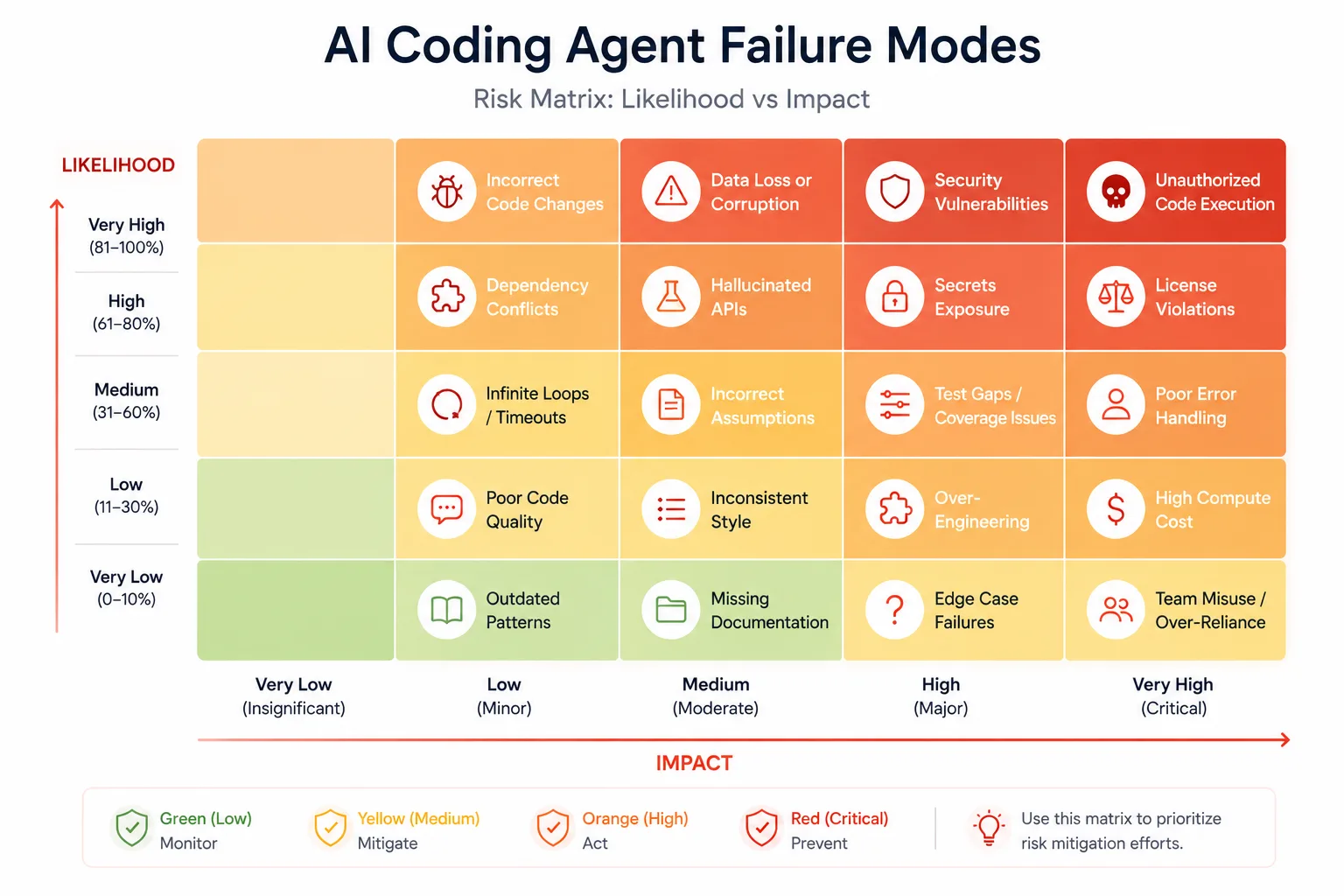
Despite their capabilities, AI coding agents can produce inaccurate code, introduce security vulnerabilities, or misunderstand business requirements. Human oversight remains essential to validate outputs and ensure software quality, compliance, and reliability.
Hallucinated Code
AI coding agents can and do generate code that looks correct but is subtly or severely wrong, a phenomenon called hallucination. This is most dangerous when the hallucinated code compiles and runs without immediately obvious errors, but contains logical bugs that only manifest in edge cases or at scale. Hallucination rates vary by model and task complexity, but they have not been eliminated. Every developer using AI coding agents must maintain a disciplined code review process.
AI Hallucinations in Software Development
Security Risks
AI-generated code presents significant security risks that are often underappreciated. Studies have shown that LLMs frequently generate code with common security vulnerabilities, such as SQL injection risks, insecure deserialization, improper authentication checks, and hardcoded credentials. These vulnerabilities appear in code that otherwise looks clean and functional. Organizations using AI coding agents must integrate automated security scanning and human security review into their workflows.
AI Coding Security Risks: What Developers Must Know
Dependency Issues
AI coding agents sometimes generate code that depends on outdated library versions, deprecated APIs, or packages with known security vulnerabilities. Because models have training cutoffs, their knowledge of the current state of the package ecosystem is always somewhat stale. Developers must verify that generated dependency choices reflect current, maintained, and secure library versions.
Context Window Limits
Even with context windows of 1–2 million tokens, very large enterprise codebases exceed what any AI coding agent can fully hold in context simultaneously. This limits the agent’s ability to reason about global system architecture, find all usages of a pattern across a massive codebase, or ensure consistency across millions of lines of code. Context management strategies help, but the fundamental constraint remains a real limitation for large-scale applications.
Cost Challenges
AI coding agent usage at scale is not cheap. Complex agentic tasks can consume thousands of tokens and run for extended periods, generating API costs that add up quickly for high-volume usage. Teams need to budget carefully, prioritize which tasks benefit most from agent assistance, and monitor usage to avoid unexpected cost overruns.
Compliance Concerns
Organizations in regulated industries, such as finance, healthcare, and government, face additional challenges. Sending proprietary code to third-party AI APIs may conflict with data residency requirements, IP agreements, or compliance frameworks like HIPAA or GDPR. These organizations must carefully evaluate which agent platforms offer on-premises deployment, private cloud options, or sufficient contractual protections before adopting AI coding agents at scale.
AI Coding Agents and MCP
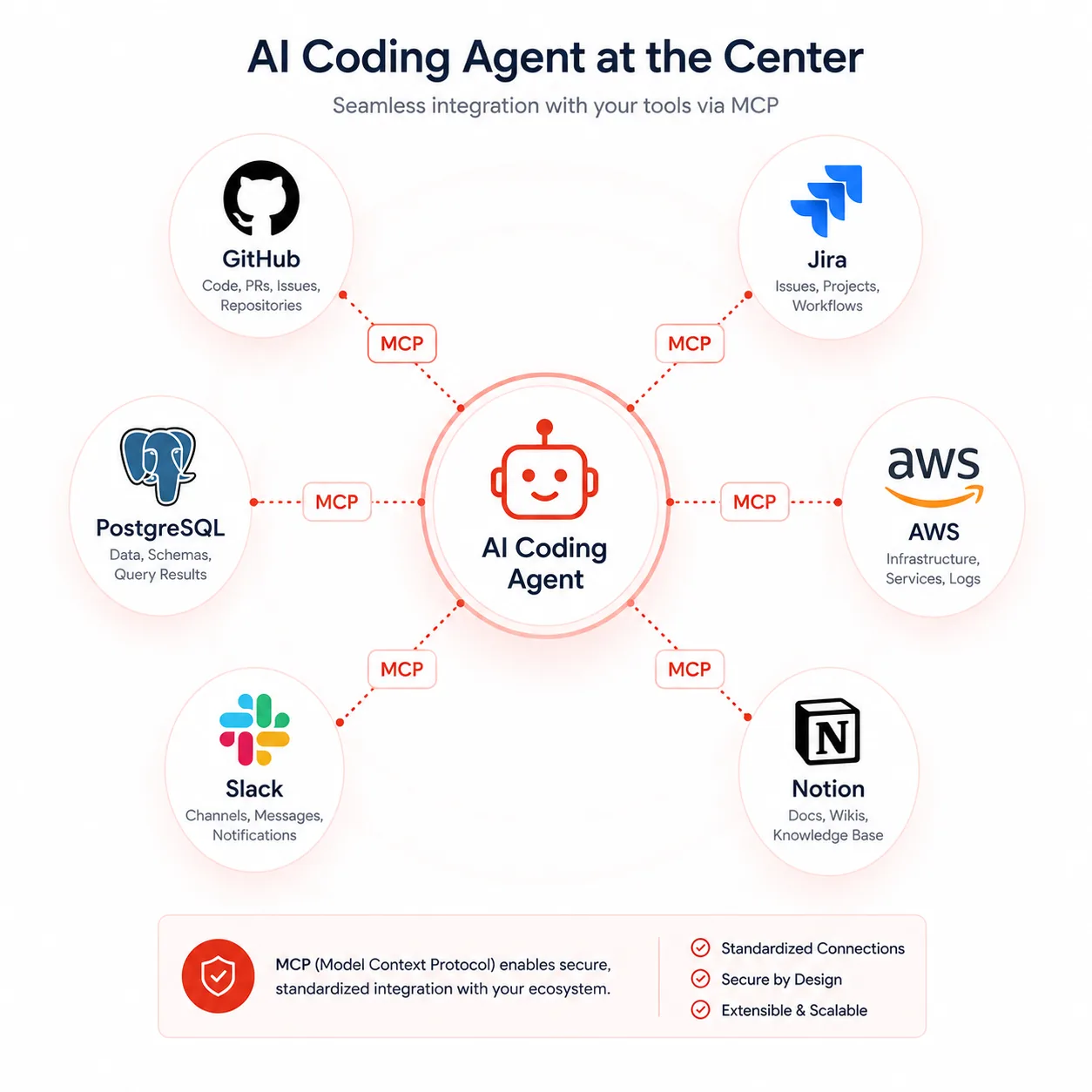
The Model Context Protocol (MCP) extends the capabilities of AI coding agents by enabling secure access to external tools, databases, APIs, and development environments. This allows agents to move beyond code generation and actively participate in real-world software workflows.
What Is MCP
The Model Context Protocol (MCP) is an open standard, originally developed by Anthropic and now maintained collaboratively across the AI industry, that defines how AI agents connect to external tools, data sources, and services. Think of MCP as the USB standard for AI tools, just as USB provides a universal connector so any device can work with any computer, MCP provides a universal protocol so any tool can work with any AI agent.
MCP defines three core primitives: tools (actions the agent can execute, like running a query or creating a file), resources (data the agent can read, like database records or file contents), and prompts (predefined instruction templates for common tasks). Any service that exposes an MCP server immediately becomes usable by any MCP-compatible AI agent.
The Complete MCP Guide for Developers
Why MCP Matters
Before MCP, each AI coding agent had its own proprietary integration system. Claude had its own tool definitions, OpenAI had function calling with its own format, and various IDE integrations had their own plugin architectures. This fragmentation meant that integrations built for one agent could not be reused for another. MCP solves this by standardizing the interface; a GitHub MCP server built once can be used by Claude Code, Cursor, Devin, and any other MCP-compatible agent, dramatically reducing the cost of building and maintaining integrations.
MCP Servers
MCP servers are the implementations that expose tools and resources to AI agents. In 2026, a large and growing ecosystem of MCP servers covers virtually every major developer tool: GitHub, GitLab, Jira, Linear, Notion, PostgreSQL, MongoDB, AWS, GCP, Azure, Vercel, Netlify, Docker, Kubernetes, and hundreds more. Many are open source, and most major SaaS providers now offer official MCP servers as part of their developer ecosystem.
Best MCP Servers for Software Developers 2026
Future of Tool Connectivity
The MCP ecosystem is still growing rapidly. Emerging directions include MCP servers for hardware interfaces, IoT devices, internal enterprise systems, and custom business logic. As MCP adoption deepens, AI coding agents will gain the ability to interact with an ever-richer set of tools, blurring the line between “AI coding agent” and “AI software development team member” that can interact with every system a human developer uses.
Can AI Coding Agents Replace Developers?
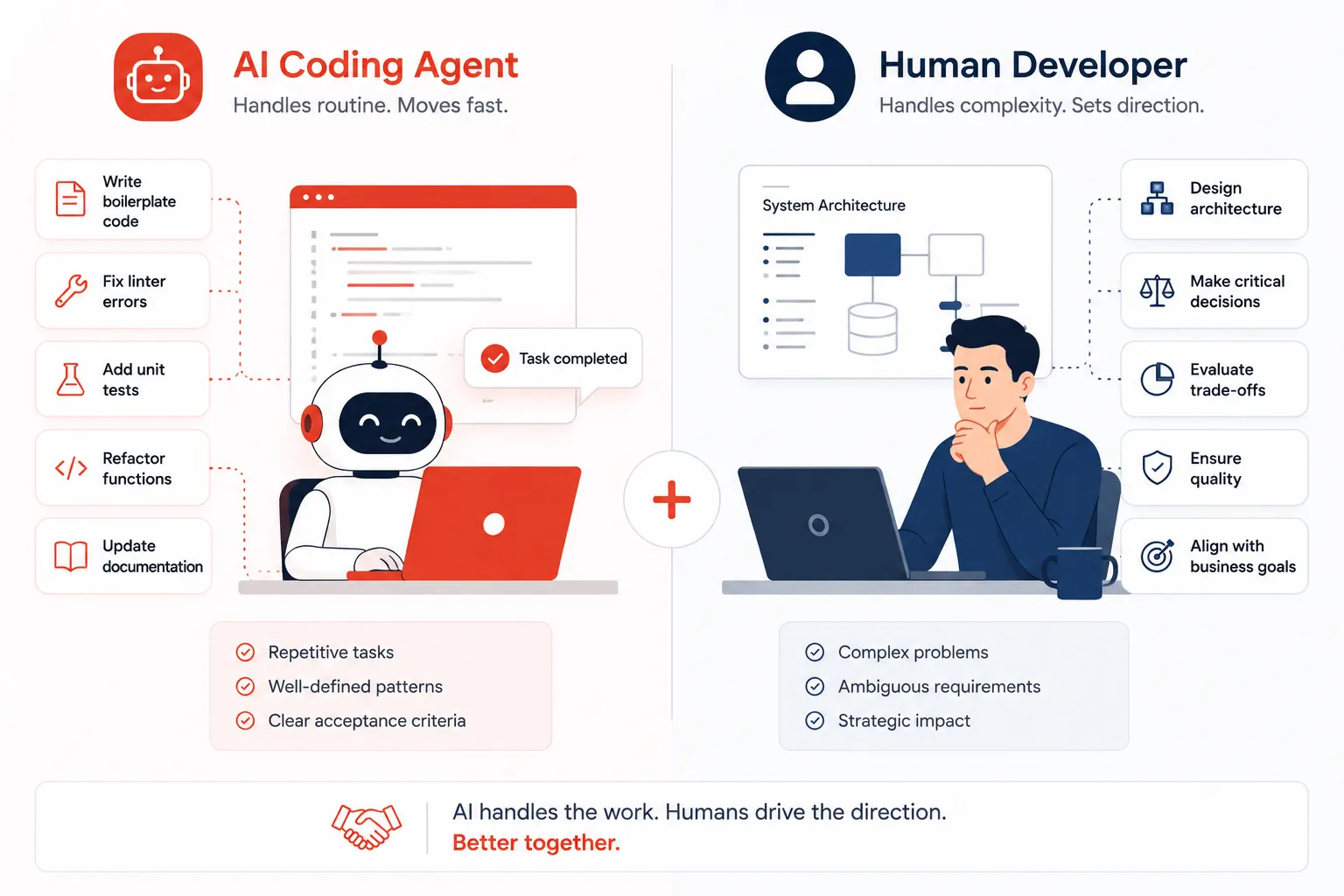
AI coding agents are powerful collaborators, but they cannot fully replace experienced developers who provide strategic thinking, domain expertise, and critical decision-making. The most effective development teams combine human judgment with AI-powered productivity.
What Agents Can Already Do
It is important to be honest about how much AI coding agents can already accomplish autonomously. They can build complete CRUD applications, REST APIs, and simple web apps. They can refactor large codebases, improve test coverage, generate comprehensive documentation, debug common classes of errors, migrate from one library or framework to another, and handle most routine maintenance tasks. For well-defined, scoped tasks with clear success criteria, AI coding agents are genuinely competitive with junior-to-mid-level developers in terms of raw output.
What Agents Still Cannot Do
AI coding agents have significant limitations that make full autonomy unrealistic for complex, real-world software in 2026. They cannot understand the business context the way a developer embedded in an organization does. They do not have the judgment to navigate stakeholder requirements, technical debt tradeoffs, or architectural decisions that require an understanding of the organization’s history and direction. They produce security vulnerabilities at rates unacceptable for production deployment without expert review. And they struggle with truly novel problems that require reasoning beyond the patterns in their training data.
Future of Software Engineering
The most plausible future is not AI replacing developers, but AI changing what developers do. As agents handle more implementation work, senior developers will focus increasingly on architecture, product thinking, security review, and agent orchestration. The skills that will be most valued are those that complement rather than compete with AI: clear communication of requirements, system design, security expertise, and the ability to evaluate and direct AI-generated work.
Will AI Replace Software Engineers? The Real Answer
Human + Agent Collaboration
The teams achieving the best results in 2026 treat AI coding agents as multipliers, not replacements. Experienced developers set clear goals, review agent output critically, catch security issues and logical errors, make architectural decisions, and handle stakeholder communication while agents handle the bulk of implementation, testing, and documentation work. This human-agent collaboration model can produce the output of a team two to four times larger, with careful oversight and quality control.
The Future of AI Coding Agents
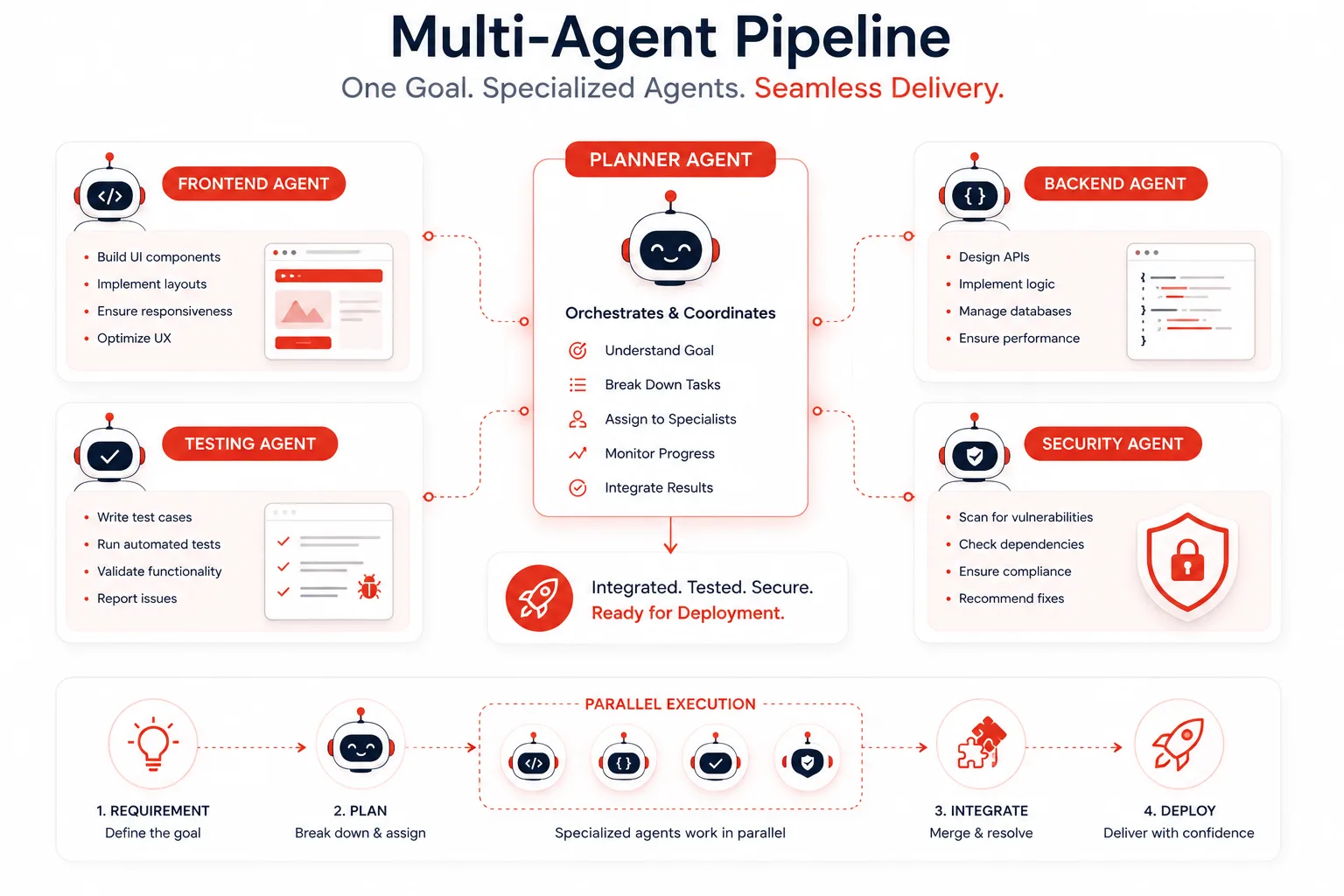
As reasoning models, tool integration, and autonomous workflows continue to evolve, AI coding agents will become increasingly capable of handling complex development tasks. Future software teams are likely to operate with multiple specialized AI agents working alongside human engineers.
Multi-Agent Development Teams
The next major evolution is multi-agent architecture systems, where multiple specialized AI agents work together on different aspects of a project simultaneously. A planner agent breaks down a product requirement, a frontend agent builds the UI, a backend agent builds the API, a testing agent writes tests, and a security agent reviews everything. These agents communicate and coordinate through shared memory and message-passing systems, producing integrated software at a speed no single agent or developer could match.
Multi-Agent Software Development: How It Works
Autonomous Product Creation
Within the next two to three years, we will see AI agent pipelines capable of taking a product specification from a non-technical founder and producing a deployable MVP with minimal human technical involvement. This will not produce sophisticated enterprise software, but for many categories of SaaS products, mobile apps, and automation tools, the bar for MVP quality is achievable by well-coordinated agent pipelines representing a profound democratization of software creation.
AI Project Managers
Orchestrator agents, which manage work allocation, progress tracking, and coordination between specialized agents, are emerging as a distinct category. These AI project managers can break large product requirements into tasks, assign them to appropriate agents, monitor progress, handle blockers, and escalate to human developers when necessary. Combined with coding agents, they begin to approximate the full function of a small engineering team.
Self-Healing Applications
Self-healing applications systems that detect their own failures, diagnose root causes, and apply fixes autonomously are moving from research concept to practical reality. AI coding agents integrated directly into production monitoring can respond to errors in real time, generating and deploying patches that restore correct behavior before human engineers are even alerted. This capability is already being piloted by large technology companies and will become more widespread through 2027 and beyond.
Agent Marketplaces
As AI coding agents become more specialized, we are seeing the emergence of agent marketplace platforms where specialized agents for specific domains (Solidity smart contracts, iOS development, database optimization, accessibility compliance) can be discovered, evaluated, and deployed. These marketplaces will enable a new kind of software supply chain, where the building blocks of development include not just libraries and frameworks but specialized AI development agents.
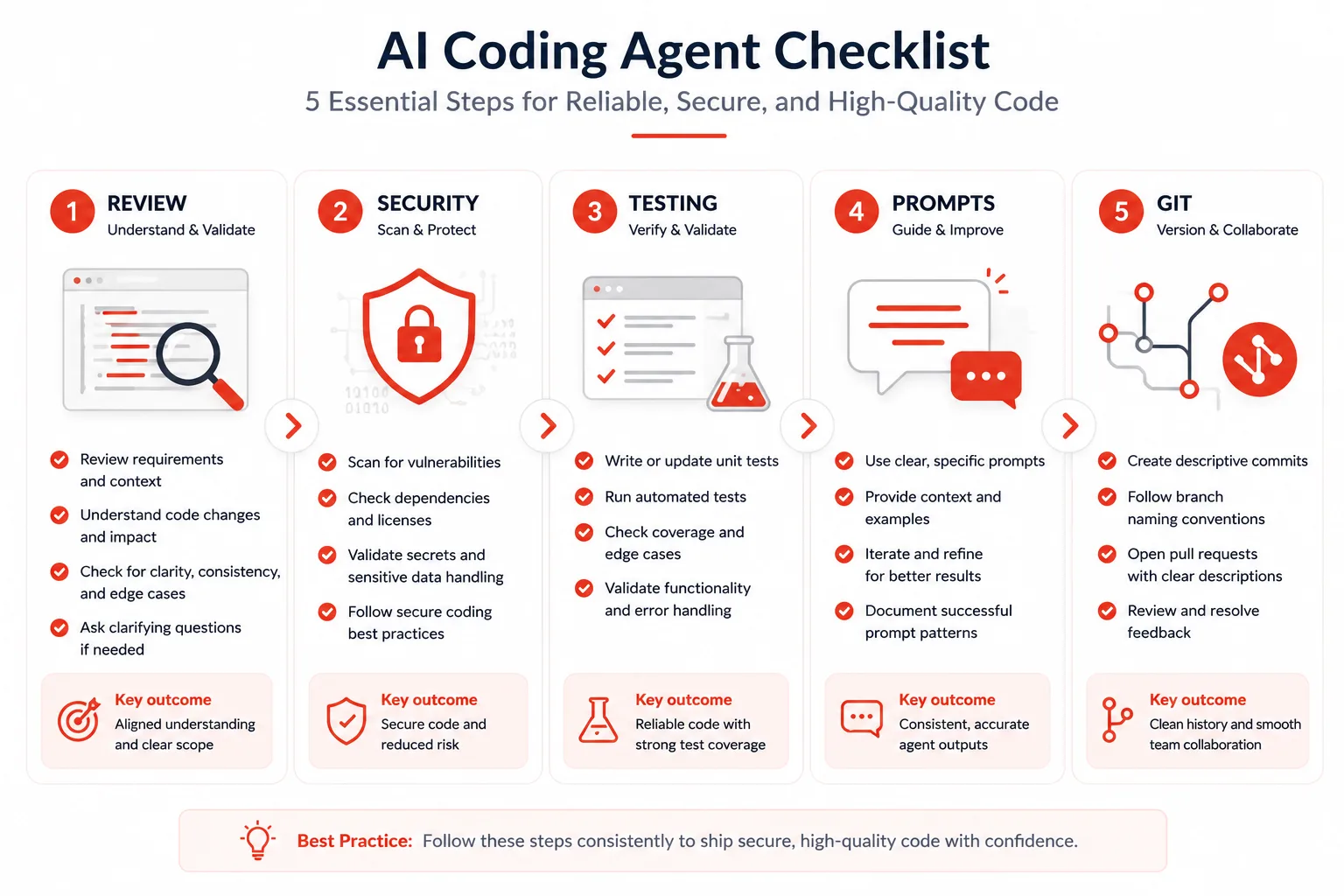
Best Practices for Using AI Coding Agents
To maximize value, developers should provide clear requirements, review generated code carefully, and establish strong testing and security processes. Treating AI agents as collaborative assistants rather than autonomous replacements leads to the best outcomes.
Human Review Requirements
Never deploy AI-generated code to production without human review. This is the single most important best practice. Code review for AI-generated work should focus specifically on security vulnerabilities, logical correctness in edge cases, and alignment with the system’s existing architectural patterns. AI agents are productive tools, not infallible engineers, and review is the essential quality gate that makes their output safe to use in production.
AI Code Review Checklist: What to Look For
Security Checks
Integrate automated security scanning tools (Semgrep, Snyk, or Checkmarx) into every workflow that involves AI-generated code. Do not rely on the agent to catch its own security issues. Additionally, train your developers to recognize the most common classes of security vulnerabilities that AI agents tend to introduce: injection flaws, insecure deserialization, improper access controls, and cryptographic weaknesses.
Testing Workflows
Always require tests for AI-generated code, and always run the full test suite after agent-assisted changes. Tests are your primary mechanism for catching the subtle logical errors that agents introduce. If an agent makes a change that breaks existing tests, treat that as an important signal and investigate whether the change is actually correct, rather than simply updating the tests to pass.
Prompt Engineering
The quality of your prompts directly determines the quality of agent output. Effective prompts for coding agents include: a clear, specific goal; relevant context about the codebase and constraints; the programming language, framework, and version in use; any specific patterns or conventions to follow; and explicit success criteria. Vague prompts produce vague results. Taking two minutes to write a precise prompt saves hours of reviewing and correcting poor output.
Prompt Engineering for AI Coding Agents – Advanced Guide
Repository Management
Use version control diligently when working with AI coding agents. Create a new branch before giving an agent a significant task, so all its changes are isolated and can be reviewed or reverted cleanly. Never allow an agent to commit directly to your main or production branch. Treat agent-generated pull requests with the same scrutiny you would apply to a junior developer’s work review, every file changed, not just the summary the agent provides.
Frequently Asked Questions About AI Coding Agents
Developers and business leaders often have questions about accuracy, security, costs, implementation, and real-world use cases. This section answers the most common concerns to help organizations adopt AI coding agents with confidence.
What is an AI coding agent?
An AI coding agent is an autonomous software system powered by a large language model that can plan, write, test, debug, and deploy code to complete complex software development tasks with minimal human intervention. Unlike simple autocomplete tools, AI coding agents use tools like terminals, file systems, and browsers to act in real development environments.
Which AI coding agent is best in 2026?
The best AI coding agent depends on your use case. Claude Code excels at complex, multi-step engineering tasks with strong reasoning and transparency. Cursor Agent is the most popular choice for individual developers wanting an IDE-integrated experience. Devin AI offers the most autonomous end-to-end capability for fully delegated tasks. Gemini Coding Agent is ideal for teams in the Google ecosystem. There is no single “best” evaluation based on your tech stack, workflow, and team size.
Can AI coding agents write production code?
Yes, AI coding agents can write production-quality code, but only with appropriate human review and testing. AI-generated code frequently contains subtle logical errors, security vulnerabilities, and outdated dependency choices that only diligent review will catch. Teams that deploy AI-generated code to production without review consistently report higher defect rates. Use agents to accelerate development; use human review to ensure quality.
Do AI coding agents replace developers?
Not in 2026, and likely not in the near future for complex, real-world software. AI coding agents amplify developer productivity dramatically but require human oversight for architecture decisions, security review, stakeholder communication, and quality assurance. The most realistic near-term outcome is that a developer working with AI coding agents can accomplish what previously required a larger team, not that AI agents make developers unnecessary.
How much do AI coding agents cost?
Costs vary significantly. Cursor Agent starts at approximately $20/month for a Pro subscription. Claude Code is billed by API token usage, with complex tasks costing $1–$10+ each, depending on length and model. Devin AI uses an enterprise subscription model starting around $500/month for team plans. OpenAI Codex is available through ChatGPT Pro ($200/month) or API pricing. For high-volume usage, total costs can reach thousands of dollars per month.
What is the difference between Cursor and Claude Code?
Cursor Agent is an IDE-based experience that lives inside a VS Code fork and provides a visual, familiar development environment with AI agent capabilities built in. Claude Code is a command-line tool that runs in the terminal, offering a more direct and transparent agentic workflow without a GUI. Cursor is more approachable for developers accustomed to visual IDEs; Claude Code is preferred by developers who want fine-grained control and transparency over the agent’s actions.
What is MCP in the context of AI coding agents?
MCP (Model Context Protocol) is an open standard that defines how AI agents connect to external tools and services. It acts as a universal interface; a GitHub MCP server, a database MCP server, or a Jira MCP server can be used by any MCP-compatible AI coding agent without custom integration work. MCP is now the industry standard for tool connectivity in AI agents and is supported by all major coding agent platforms.
The Complete MCP Guide for Developers
Are AI coding agents secure?
AI coding agents introduce both security benefits (more consistent security pattern usage, better documentation) and significant risks (generation of vulnerable code, access to sensitive codebases, potential for prompt injection attacks). Their security depends entirely on how they are deployed and what controls surround them. Organizations should require security scanning of all AI-generated code, use agents with minimal-privilege access to repositories, and never provide agents with production credentials or sensitive secrets.
AI Coding Security Risks: What Developers Must Know
Can AI coding agents work with GitHub?
Yes. Most major AI coding agents have native GitHub integration or support GitHub through MCP servers. They can read repository contents, create branches, open pull requests, respond to code review comments, and push code changes. Claude Code, Cursor Agent, Devin AI, and OpenAI Codex all support GitHub workflows. For GitLab and Bitbucket users, MCP server integrations provide similar functionality.
What programming languages do AI coding agents support?
Modern AI coding agents support virtually all mainstream programming languages, including Python, JavaScript, TypeScript, Java, C#, C++, Go, Rust, PHP, Ruby, Swift, Kotlin, and many more. Performance is generally strongest in languages heavily represented in training data. Python, JavaScript, and TypeScript tend to see the best results. Support for more niche or domain-specific languages varies by agent and underlying model.
What is agentic AI for coding?
Agentic AI for coding refers to the use of AI systems that operate with a degree of autonomy, making decisions, using tools, and executing multi-step tasks, to accomplish software development goals. It distinguishes the new generation of AI development tools (which act autonomously) from earlier generations (which only responded to direct prompts). Agentic AI for coding represents the current frontier of developer productivity tooling.
How do AI coding agents handle large codebases?
Large codebases exceed what most AI coding agents can fully load into their context window at once. Agents handle this through semantic code search (using embeddings to find relevant files), hierarchical summarization (creating compressed summaries of modules not in focus), and intelligent context management (dynamically loading and unloading files as needed). Gemini’s 2M token context window reduces this challenge for some use cases, but for the largest enterprise codebases, context management remains a significant limitation.
Can AI coding agents work on mobile app development?
Yes. AI coding agents support iOS development (Swift/SwiftUI), Android development (Kotlin/Jetpack Compose), and cross-platform frameworks like React Native and Flutter. Gemini Coding Agent has particularly strong Android Studio integration. The quality of results is comparable to web development for standard patterns, though complex platform-specific APIs and UI testing can be more challenging for agents than straightforward backend development.
What benchmarks evaluate AI coding agent performance?
The primary benchmark for AI coding agent evaluation is SWE-Bench (Software Engineering Benchmark), which tests agents on real GitHub issues from popular open-source repositories. As of 2026, leading agents score 40–70% on SWE-Bench Verified, meaning they can autonomously resolve that proportion of real-world issues. Other benchmarks include HumanEval (code generation correctness) and MBPP (programming problem solving).
Do I need technical knowledge to use AI coding agents?
Some technical knowledge is strongly recommended, even when using AI coding agents. While agents can lower the barrier for non-technical users to create simple software, deploying agents effectively and safely reviewing output, catching security issues, managing context, and troubleshooting failures requires a meaningful understanding of software development. Non-technical users can prototype and experiment, but production software development still requires engineering expertise.
How do AI coding agents handle testing?
AI coding agents can generate test code, run existing test suites, interpret test failures, and iterate to fix failing tests. They typically generate unit tests, integration tests, and end-to-end tests depending on the framework in use. Test generation quality is generally high for well-defined functions with clear inputs and outputs, and lower for complex stateful logic or tests that require extensive mocking.
Conclusion: The Agentic Development Era Has Arrived
AI coding agents are reshaping how software is designed, built, tested, and maintained across the industry. Organizations that learn to effectively combine human expertise with agentic AI workflows will gain a significant competitive advantage in the years ahead.
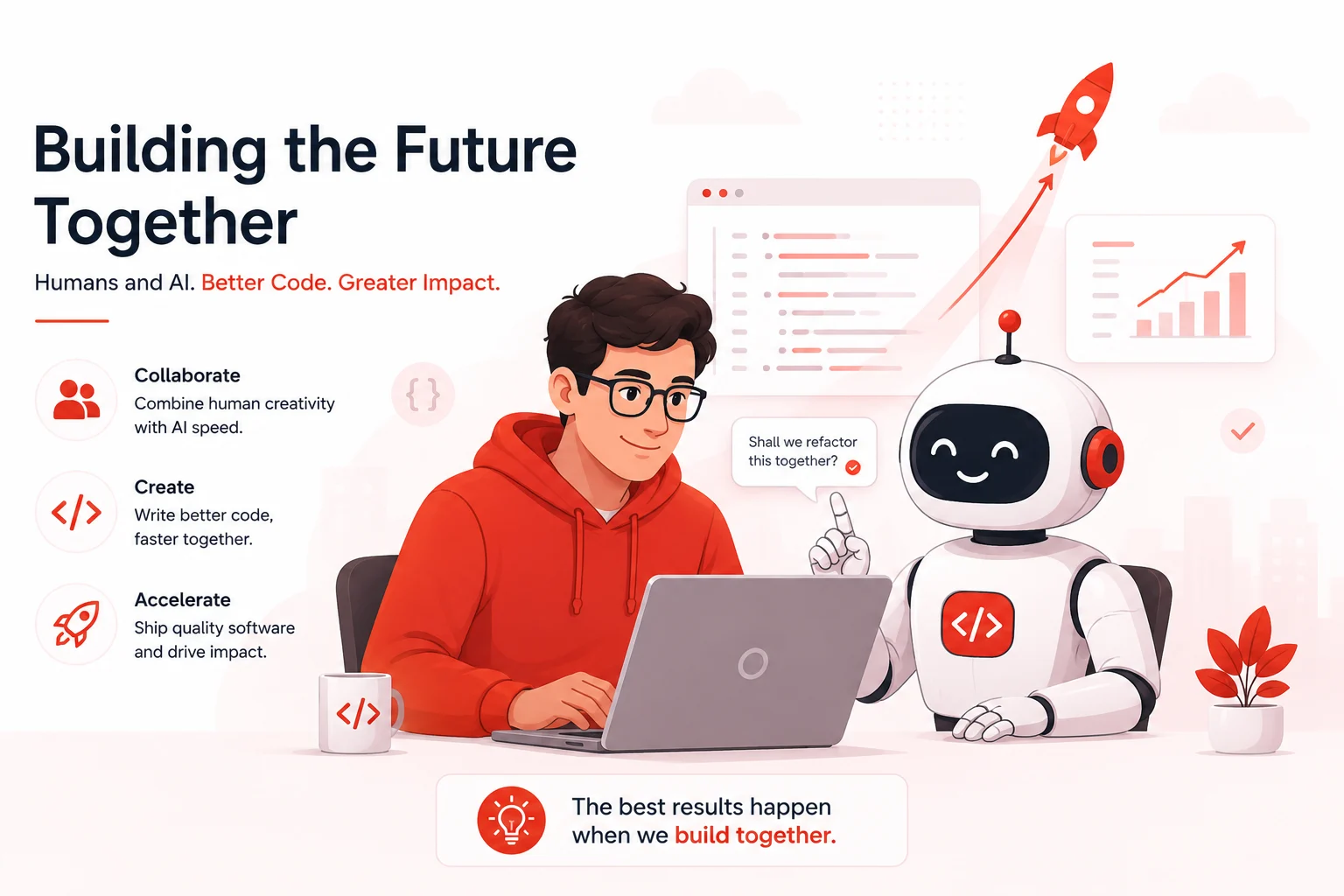
AI coding agents are not a future technology; they are a present reality, reshaping how software gets built in 2026. From individual developers shipping products faster than ever before to enterprise teams tackling legacy modernization at previously impossible scale, the impact of autonomous coding agents is already measurable and growing rapidly. The key insight is this: AI coding agents do not replace software engineering, they transform it. They take on the mechanical, repetitive, and well-defined parts of development, freeing human engineers to focus on the creative, strategic, and judgment-intensive work that machines cannot yet do. The developers and teams who thrive will be those who learn to work effectively with agents: directing them clearly, reviewing their output critically, and building workflows that capture their productivity while managing their limitations.
Whether you start with Cursor Agent, Claude Code, or Devin AI, the time to begin integrating AI coding agents into your workflow is now. The learning curve is real, but the productivity gains for developers who approach agents thoughtfully are among the most significant in the history of software engineering tooling.
Ready to go deeper? Explore our detailed reviews of individual AI coding agents, our complete guide to MCP integration, and our best practices for secure AI-assisted development, all linked throughout this guide.