
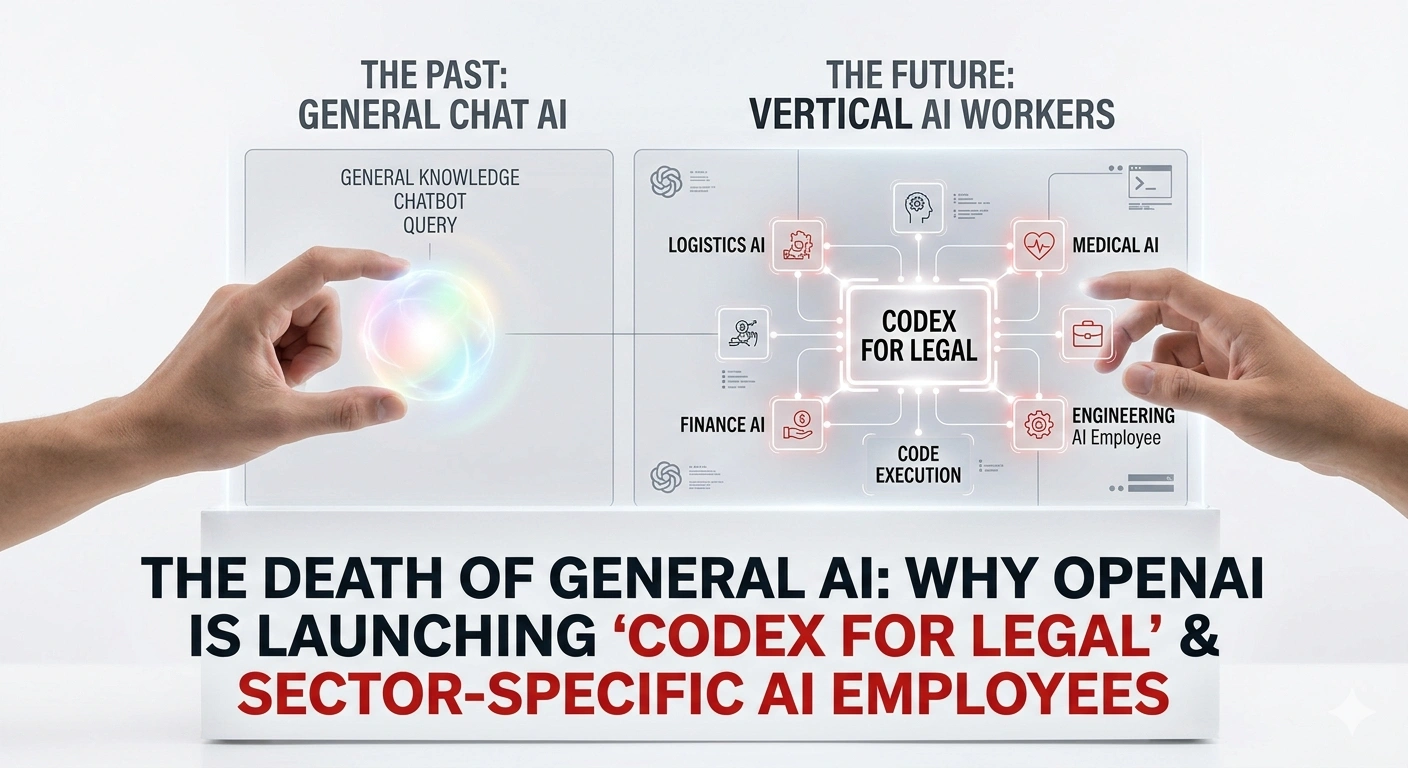
What is OpenAI’s Vertical AI strategy? OpenAI is shifting away from generalized chatbots toward domain-specific corporate execution. By combining their frontier reasoning models with the newly updated OpenAI Codex Desktop application, OpenAI is deploying hyper-specialized vertical agents—starting with Codex for Legal—designed to run asynchronous corporate workflows securely in isolated, sandboxed environments.
The corporate artificial intelligence market has officially graduated from the experimentation phase. For the past few years, enterprise leaders have deployed generalized large language models (LLMs) to summarize basic emails or generate generic marketing copy. However, a major strategy leak out of San Francisco reveals that OpenAI is entirely shifting its business architecture away from general-purpose assistants.
Instead, OpenAI is launching an aggressive multi-agent assault on the enterprise landscape by introducing specialized, vertical AI workers. Headlining this initiative is Codex for Legal, backed by structural upgrades to the desktop computing ecosystem. As businesses watch traditional organic search patterns shift due to the ongoing AI Overview CTR Drop, understanding how these automated backend agents function is critical for corporate survival.
The Enterprise Pivot: What is Vertical AI?
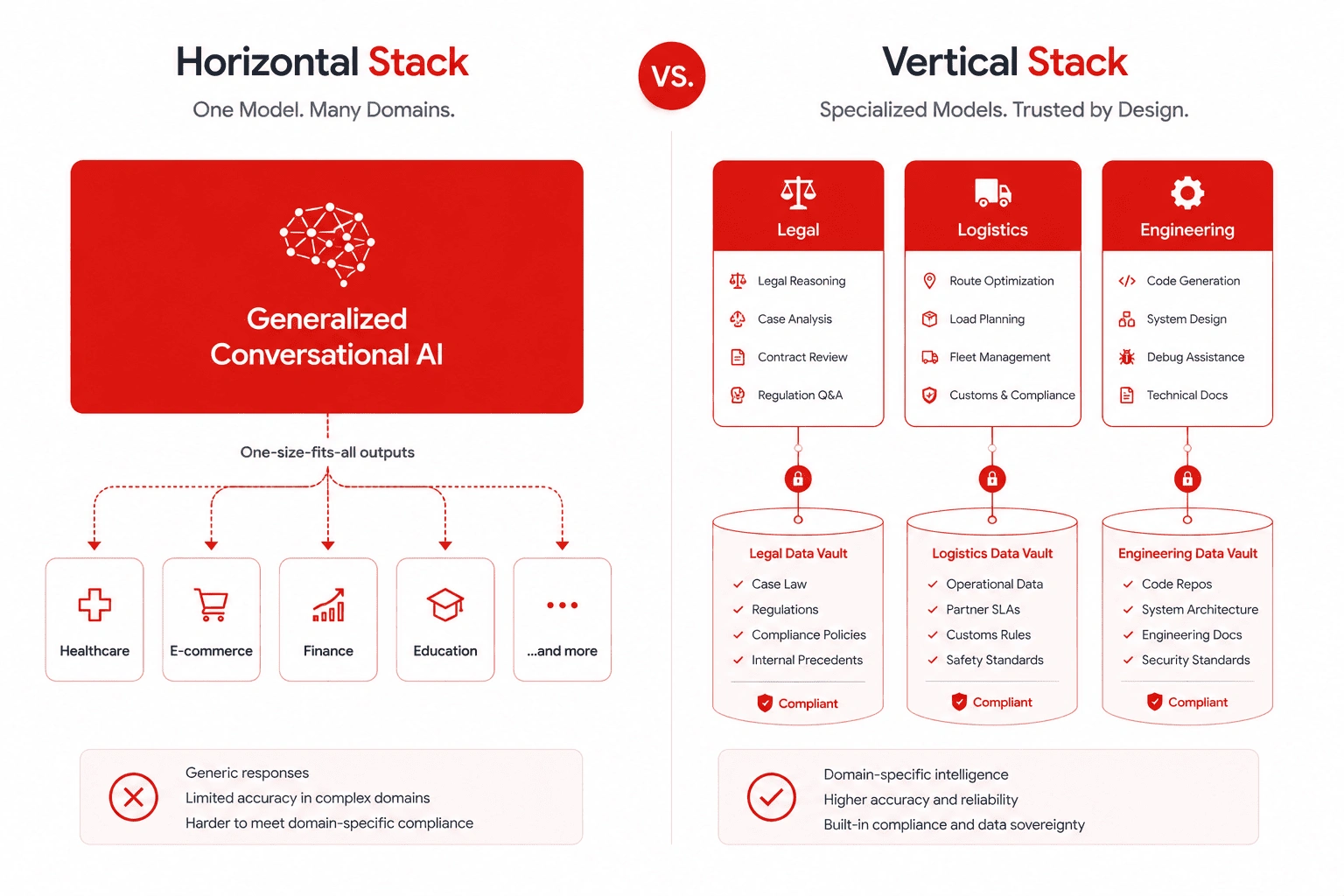
Horizontal AI refers to generalized models like basic ChatGPT or Claude, which know a little bit about everything but lack the specialized clearance or precise formatting rules required for complex corporate workflows. Vertical AI takes the opposite path: it locks a highly advanced reasoning engine (like OpenAI’s o3) inside a single industry vertical, training it on exclusive data arrays, specialized compliance standards, and custom toolkits.
OpenAI’s enterprise shift is triggered by a simple market reality: companies are refusing to pay premium subscription fees for general chatbots that hallucinate data. They will, however, pay premium rates for verified digital workers that can successfully execute automated tasks end-to-end without constant human prompt management.
Codex for Legal: Heading for Anthropic’s Corporate Market Share
The first major battleground for this specialized strategy is the legal industry. OpenAI has reportedly been hiring high-level legal-tech executives to quietly position Codex for Legal as the premier platform for enterprise compliance, contract execution, and litigation preparation.
This dedicated configuration goes head-to-head with specialized ecosystems like Anthropic’s Claude for Legal and Microsoft’s specialized compliance frameworks. Rather than just rewriting a contract template, Codex for Legal processes multi-tiered verification chains:
- Asynchronous Discovery Audits: The agent logs directly into secure corporate vaults or databases, reviews millions of pages of unstructured discovery documents, flags regulatory anomalies, and drafts compliance briefs entirely in parallel cloud sandboxes.
- Verifiable Citation Tracing: Unlike consumer-facing web tools prone to hallucination, Codex for Legal uses restricted Knowledge Graphs to cross-reference federal, state, and corporate regulatory histories, isolating exact statutes to guarantee factual precision.
- System Integration Pipelines: Through specialized enterprise partnerships with consulting giants like Cognizant, these tools are built directly into existing corporate CRM systems, Slack channels, and secure internal servers.
Background Computer Use: The Silent Desktop Operator
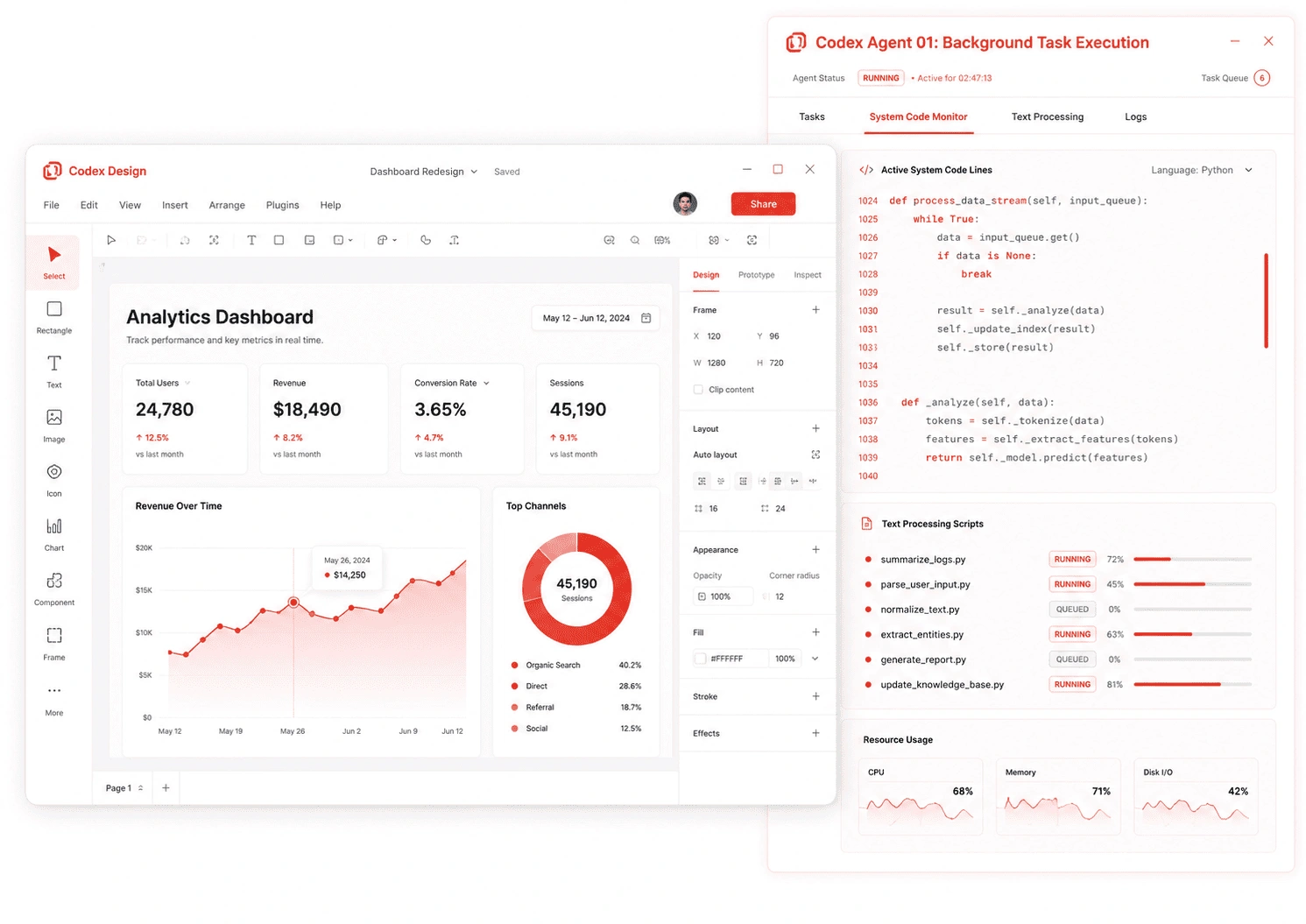
To support these domain-specific workflows, OpenAI rolled out a monumental update to the OpenAI Codex Desktop application. The system introduces an advanced capability known as **Background Computer Use**.
While previous automation software hijacked a user’s mouse pointer—making it impossible to use your computer while an AI was running a task—Codex can now interact with your operating system entirely in parallel. By utilizing native macOS TCC system frameworks (specifically Screen Recording and Accessibility permissions), Codex views your interface, maps coordinates, and inputs keyboard/click pathways in a separate, isolated desktop layer.
How Background Computer Use Works in 2026:
1. The human professional invokes the system using a targeted handler (e.g., @Computer) inside the Codex workspace.
2. The agent takes rapid visual screenshots, parsing them through advanced multimodal vision models to locate interactive layout anchors.
3. Rather than taking control of your mouse, it spins up an independent background process layer to navigate web pages, cross-reference data platforms (like Notion, Figma, or Jira), and modify local files without blocking your active cursor.
Technical Breakdown: Generalized Chatbots vs. Vertical Agents
Understanding the architecture separating legacy conversational bots from native 2026 enterprise software is necessary for planning future IT infrastructure investments:
| Technical Vector | Generalized Chatbot Layer (Legacy) | OpenAI Codex Vertical Architecture (2026) |
|---|---|---|
| Execution State | Synchronous (Requires back-and-forth prompts from users). | Asynchronous (Runs autonomously in sandboxed backgrounds). |
| System Interface | Isolated web browser windows or text API fields. | Direct background desktop operating system control via vision. |
| Verification Model | Predictive word matching (High risk of hallucination). | Isolated cloud testing, compliance checks, and knowledge graphs. |
| Primary Context | Broad, public web data indices scraped globally. | Domain-locked databases, structured APIs, and enterprise internal CRMs. |
B2B Strategy: Aligning Content with the Agentic Filter
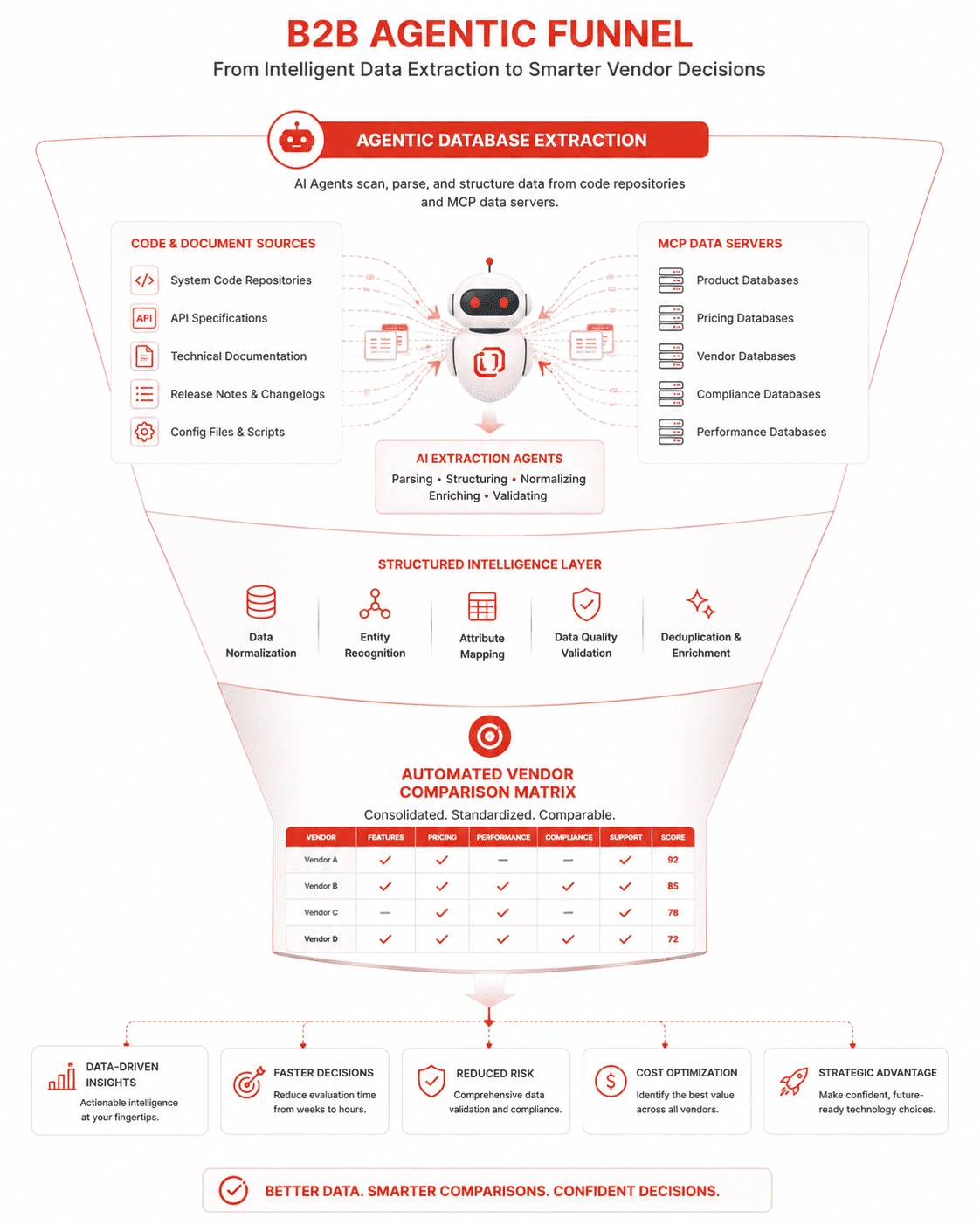
As corporate workforces start delegating discovery tasks to background agents like Codex for Legal, B2B marketing channels are transforming. When corporate buyers instruct an agent to evaluate vendors, compile contracts, or review SaaS software options, those bots do not scroll through standard Google ad placements. They query clean data nodes directly.
This behavior drastically accelerates the AI Overview CTR Drop for brands relying solely on traditional top-of-funnel informational blog posts. To keep your enterprise visible to automated business agents, apply these structural updates:
- Expose Machine-Readable Resource Nodes: Structure your product data, legal disclosures, whitepapers, and pricing models using pristine JSON-LD schemas and Model Context Protocol (MCP) server standards. If an agent can easily extract your parameters, you become the default choice in its summary deck.
- Optimize for Agent Execution Ecosystems: Ensure your SaaS products or digital tools feature open, documented API integrations. Enterprise agents actively prioritize software providers that feature plug-and-play connections over closed platforms that require manual custom development.
- Inject Verified Case Evidence: Since reasoning models use advanced logical checks to cross-verify claims, whitepapers must avoid generic marketing statements. Ground your text in verified performance data, absolute industry constraints, and verifiable case reviews to pass the agentic validity filters.
Conclusion: The Emergence of the Corporate AI Workforce
OpenAI’s architectural shift proves that the race to build bigger, general-knowledge models has reached diminishing returns for enterprise applications. The actual value lies in workflow execution. By launching specialized products like Codex for Legal and pairing them with multi-app capabilities via OpenAI Codex Desktop background compute layers, the technology is stepping firmly into active operations.
For modern enterprises, survival requires clean structural optimization. If your digital properties cannot be seamlessly parsed, integrated, and verified by these autonomous background workers, your company risks becoming completely invisible to the modern business landscape.