
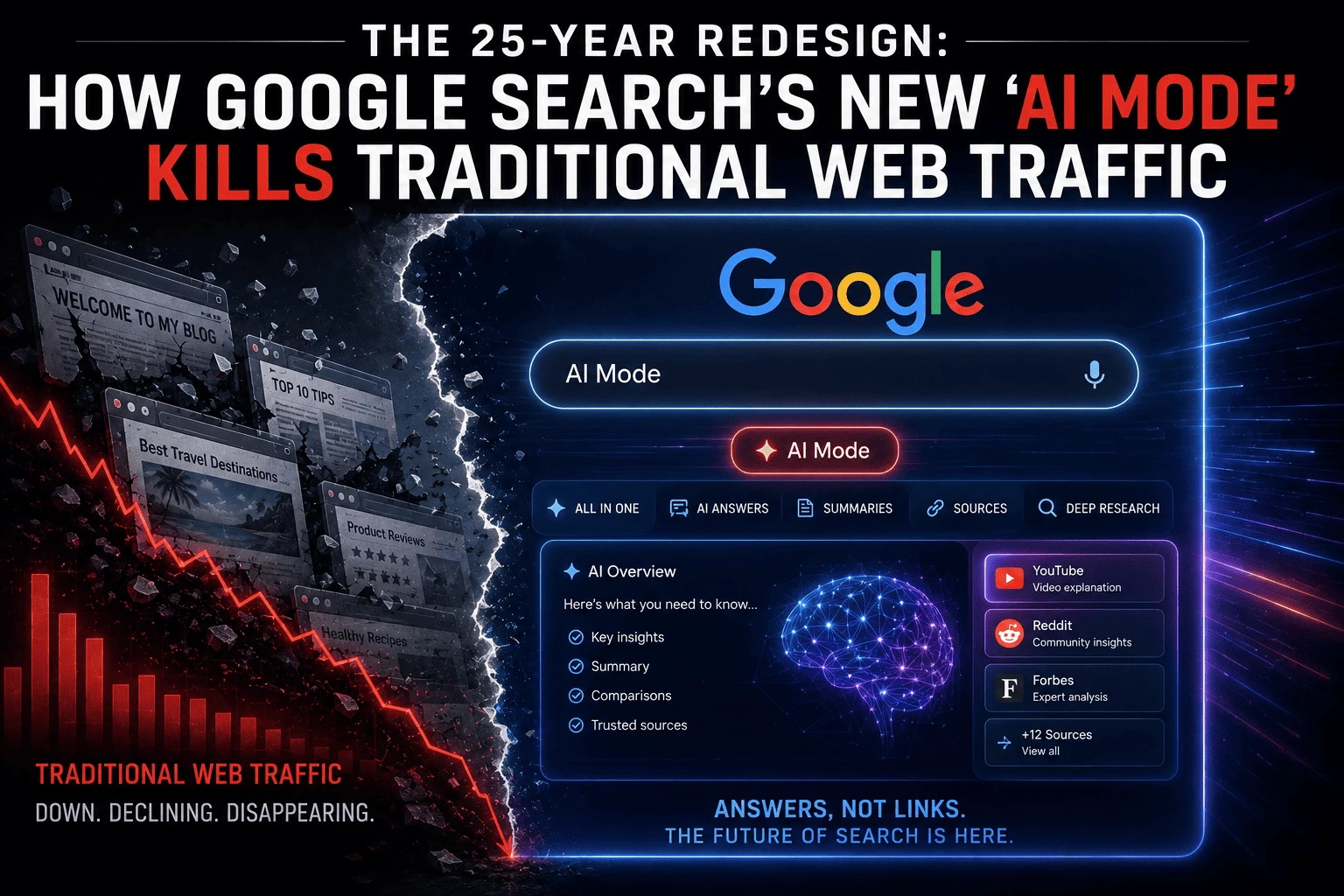
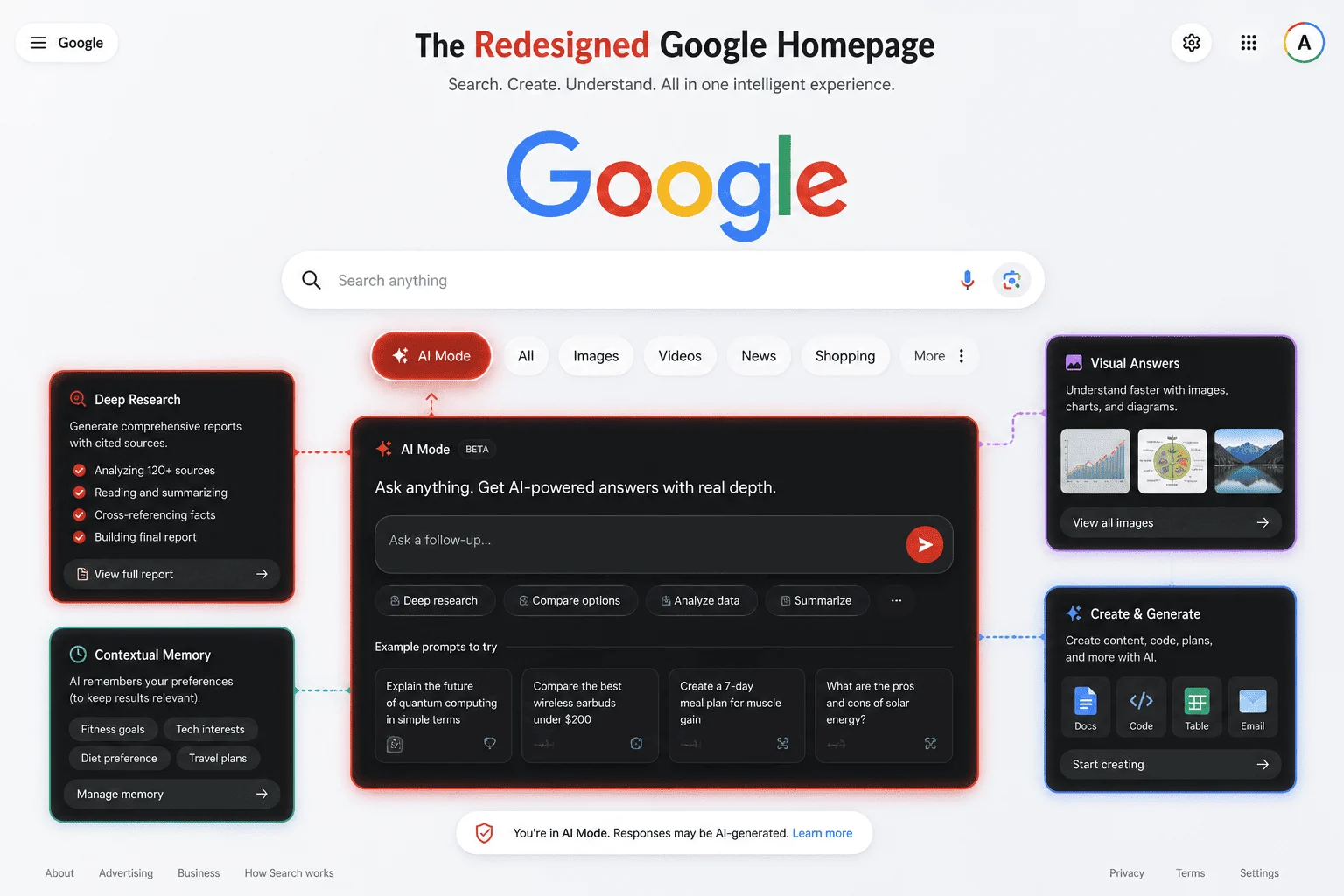
What is Google AI Mode? Rolled out in May 2026, Google AI Mode is a complete architectural overhaul of the traditional search engine bar. Powered by the ultra-low-latency Gemini 3.5 Flash Search Box framework, it replaces classic keyword text queries with an interactive, multimodal tray. Instead of browsing list results, users upload entire files, drag browser tabs, or input video clips directly into the search container to trigger autonomous, zero-click answer compilation.
The blue-link era of internet browsing is officially dead. For over a quarter of a century, the fundamental pact of the internet remained completely unchanged: a user types a specific string of keywords into a clean white box, Google indexes a directory of relevant web pages, and the user clicks through to an independent website. It was an ecosystem that generated trillions of dollars in digital commerce and publishing equity.
However, Google’s latest core deployment has permanently disrupted this workflow. By replacing the standard input field with a highly aggressive, fluid interface known as Google AI Mode, the search giant is fundamentally shifting user behavior away from content consumption and toward backend data delegation. For web publishers, e-commerce brands, and digital marketers already struggling against the severe AI Overview CTR Drop, adapting to this interface shift is no longer optional—it is a matter of pure business survival.
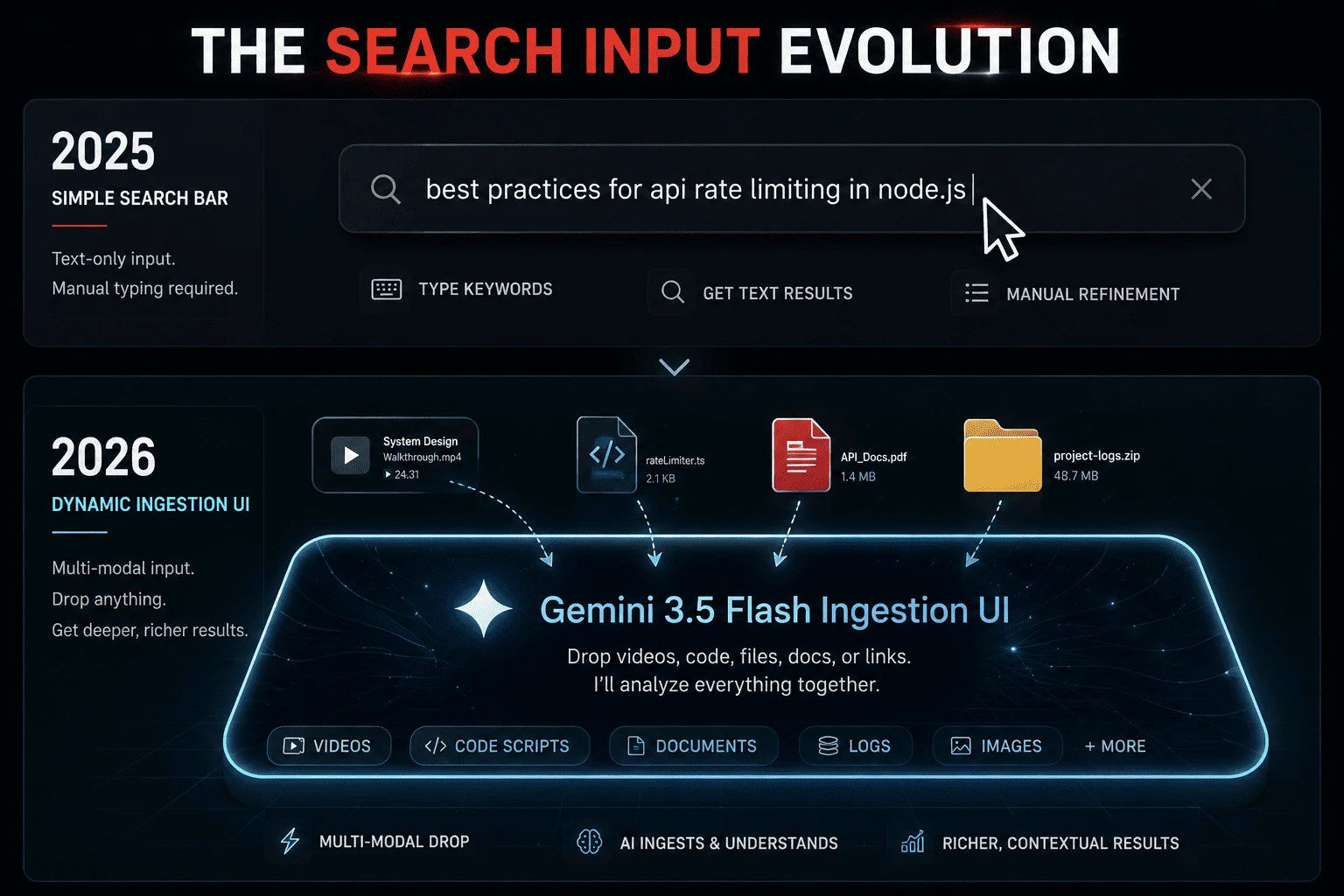
The Problem: The Death of the Keyword Text Prompt
The core issue facing online creators today is that human users are no longer forced to search for answers using isolated phrases. In the past, if a professional wanted to compare quarterly data trends, they would search for an informational guide, click three separate articles, download a couple of CSV templates, and compile the report manually. This sequence guaranteed web traffic across multiple web properties.
Under the new Gemini 3.5 Flash Search Box mechanics, that entire multi-step search pipeline is completely flattened. The user interface doesn’t just read words; it ingests context. Because the platform runs on ultra-fast, tokens-per-second model instances, users can directly drag an entire live code repository, a product spreadsheet, or a five-minute screen recording right into the search environment. The engine processes the uploaded asset, extracts the underlying data array, and executes an instant analytical summary without the user clicking a single external hyperlink.
Inside Google AI Mode: Key Features Disrupting the Web
The re-engineered search system introduces three core pillars that are actively changing consumer navigation patterns across both desktop and mobile layouts:
- Multimodal Drag-and-Drop Trays: The search bar dynamically expands into a workspace container when a media asset hovers over it. Users can upload a photo of a broken appliance or machine component and say “Fix this” to receive step-by-step troubleshooting guidelines compiled from indexed manuals.
- Asynchronous Tab Grouping: By activating Google AI Mode, users can instruct the browser to synthesize information across 15 open tabs simultaneously. Rather than clicking from tab to tab, the engine builds a consolidated, personalized comparison matrix on your screen.
- Action Engine Workflows: Google search has transformed into an active agent executor. Typing “Find a flight to London under $800 and block out my calendar if it fits my schedule” triggers background API runs that bypass intermediate booking aggregators entirely.
Understanding the Threat: The AI Overview CTR Drop
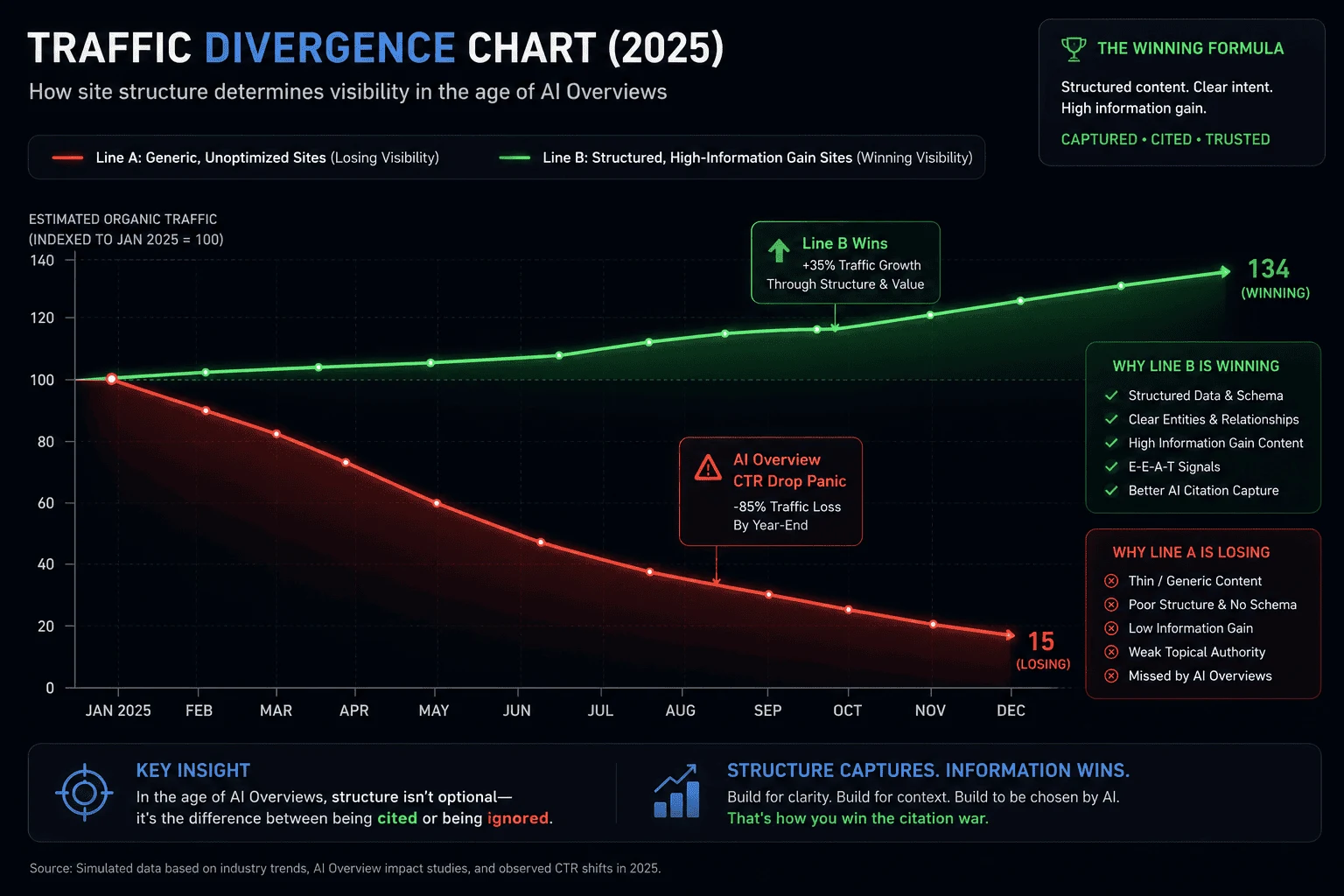
The commercial fallout of this design shift is immediate and severe. When Google’s internal algorithm handles information extraction directly within its own app layer, organic web traffic suffers an aggressive drop. Initial tracking metrics across the digital publishing industry reveal that sites optimized solely for basic, keyword-stuffed informational queries are experiencing a staggering AI Overview CTR Drop of up to 65%.
If a local software developer or technical writer answers a question perfectly, but Google’s localized reasoning layer scrapes that exact solution to display it as an inline response block, the human creator gets 100% of the server resource drain but 0% of the ad monetization or user conversion tracking.
The Solution: Optimizing Content for Multimodal Search Engines
To avoid becoming completely invisible to Google’s new interface, you must change how you structure your digital content. If you cannot stop the agent from scraping your data, you must force it to cite your brand as its primary source. Implement this three-step framework immediately to ensure your business remains visible:
The 2026 Multimodal Optimization Blueprint:
1. Anchor the “Entity Definition” First: Always place a bold, factual, 40-word core answer directly underneath your primary header. Google’s semantic parsers are trained to extract these structured blocks to populate the AI Mode summary card, ensuring your link is attached as an official citation block.
2. Implement Machine-Readable Structural Grids: Avoid long, unstructured walls of prose text. Use highly explicit HTML comparison tables, bulleted data points, and schema-mapped parameters. When the Gemini 3.5 engine scrapes your page, it favors organized data containers because they are significantly easier to translate into immediate user layouts.
3. Focus on High Information Gain Content: If your blog post merely rewrites public Wikipedia entries or generic documentation, Google will summarize it without referencing you. Inject proprietary data assets, first-hand engineering test metrics, original case files, or real-world troubleshooting loops that no AI model can simulate or predict autonomously.
Technical Mapping: Traditional Query Models vs. 2026 AI Mode
Analyze this architectural comparison to understand how the underlying mechanism of internet discovery has shifted over the current fiscal year:
| System Attribute | Legacy Text Search Engine Layer | Google AI Mode Platform Standard |
|---|---|---|
| User Input Vector | Textual keyword chains and short query sentences. | Multimodal file uploads, tab scraping, and live video clips. |
| Underlying Engine | Standard page indexing algorithms and keyword density weights. | Ultra-low-latency Gemini 3.5 Flash context scaling. |
| Traffic Destination | Direct user click-through to external web properties. | Zero-click inline text summaries with hidden source dropdowns. |
| Brand Optimization Goal | Ranking position #1 through high domain backlinks. | Securing the primary source citation inside the AI summary window. |
Conclusion: Pivot or Vanish
The launch of the Gemini 3.5 Flash Search Box paradigm proves that Google is no longer concerned with protecting the traditional publishing economy that built its initial web empire. Their sole operational objective is to maximize user retention and execution speed within their native desktop and mobile skins.
While this re-architecture threatens generic content sites, it opens a massive window of opportunity for brands that prioritize high information gain optimization. By organizing your platform data to support direct multimodal ingestion, you can position your brand as an indispensable source asset that Google’s new Google AI Mode framework is forced to recommend to millions of users daily.