
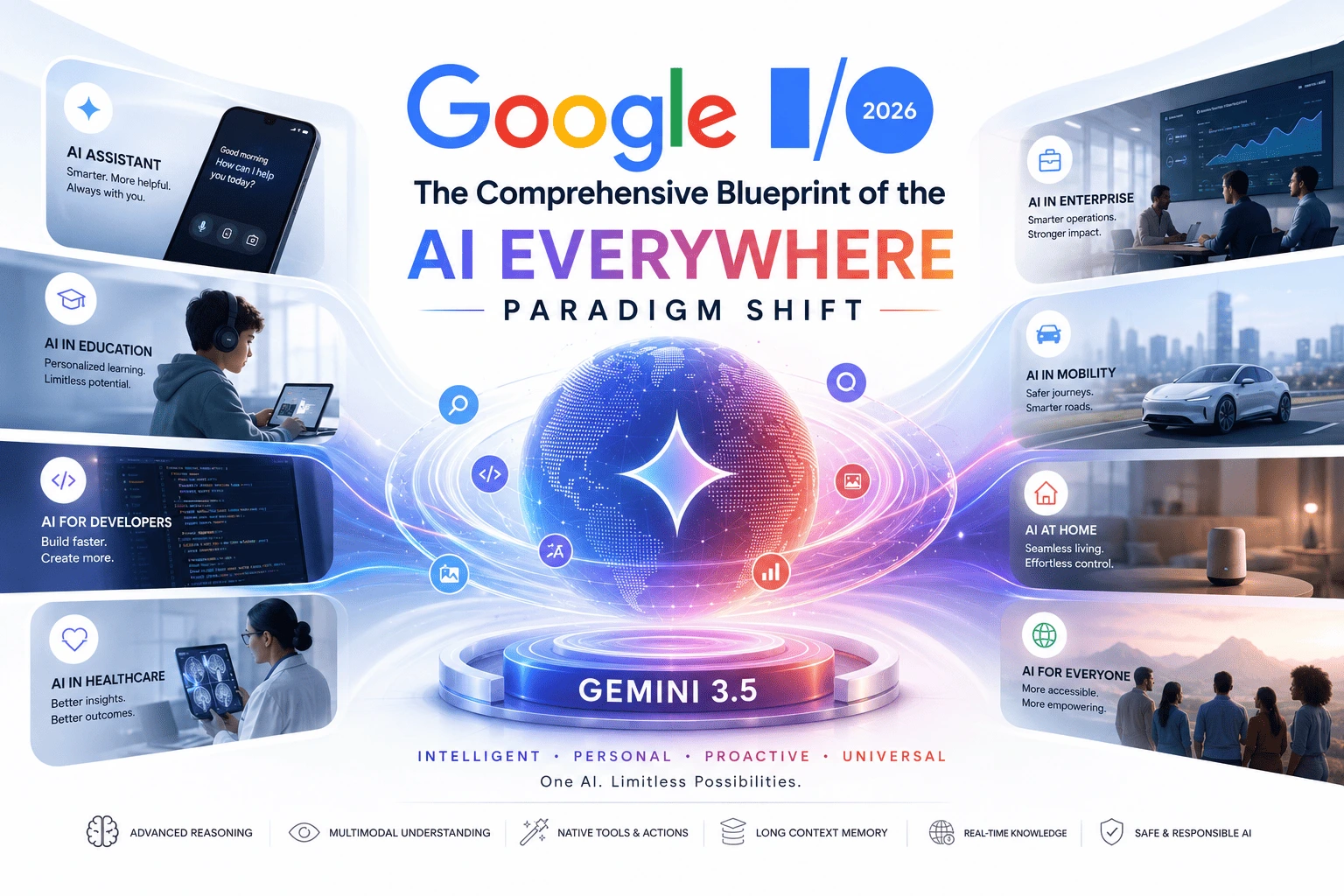
The tech landscape has officially crossed the rubicon from reactive artificial intelligence to proactive, persistent agentic networks. At this week’s annual conference, Google dismantled the legacy model of isolated chatbots. Artificial intelligence is no longer an optional digital destination; it has been woven directly into the core operating fabric of Android, Workspace, Chrome, and global search infrastructure.
For engineering groups, enterprise software architects, and digital content networks currently adjusting to volatile market dynamics and the severe AI Overview CTR Drop, the Google I/O 2026 AI Announcements provide an indispensable technological roadmap. Google is aggressively engineering a digital interface ecosystem where background processes execute complex real-world actions on behalf of users, changing the mechanics of information discovery, application layout design, and digital commerce forever.
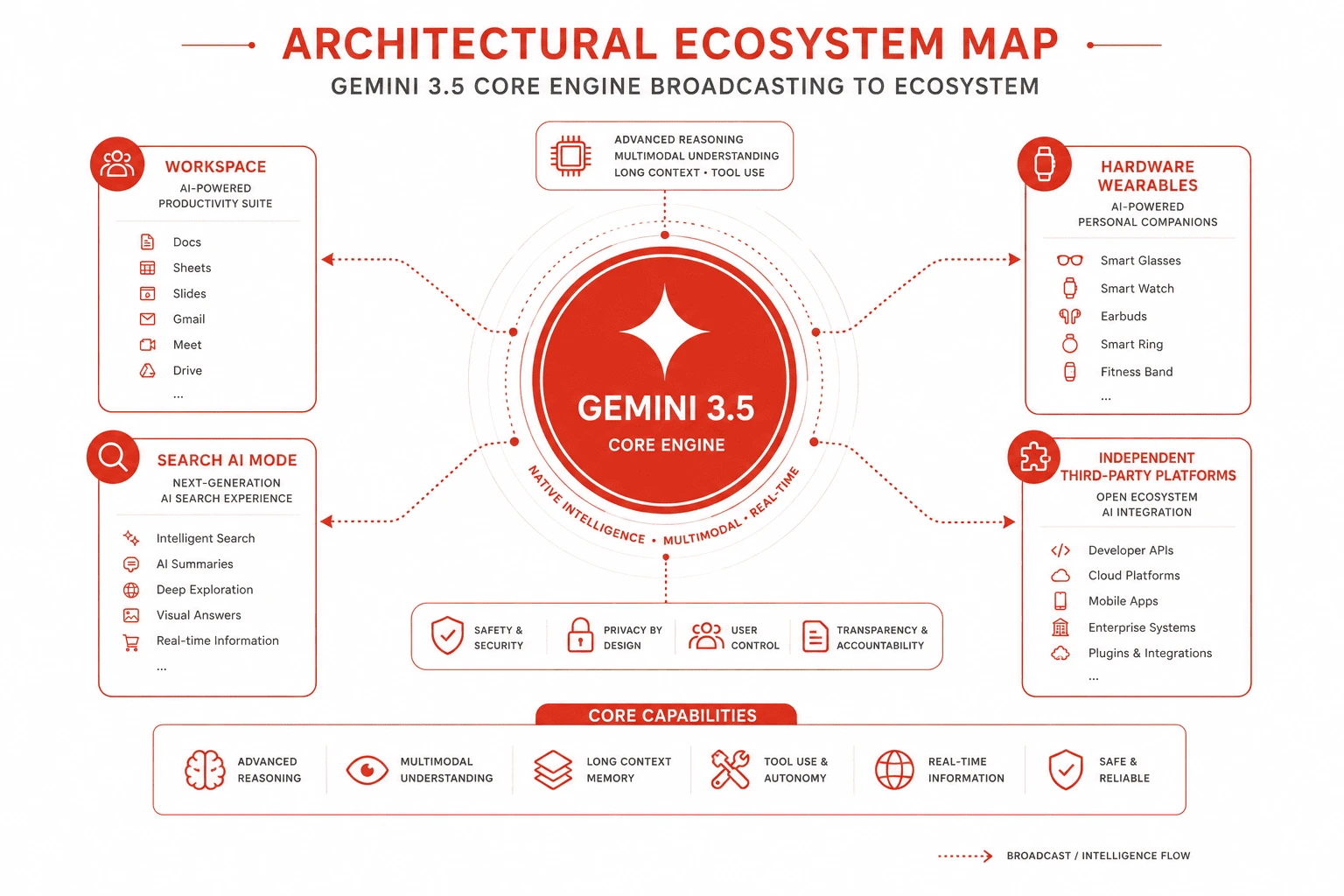
1. The Infrastructure Backbone: Gemini 3.5 Flash
The functional foundation of this transformation is the immediate global launch of Gemini 3.5 Flash. Engineered to address heavy operational deficits in speed and execution cost, this model replaces previous iterations as the foundational default framework powering the consumer Gemini application and Google Search’s interactive layout engine.
Optimized directly for continuous agentic coordination, multi-layered code compilation, and mass file scanning, Gemini 3.5 Flash operates up to four times faster than competing frontier options in tokens-per-second output metrics. In public benchmark evaluations reported during the main event, the model set historical records on localized engineering indexes, scoring 76.2% on Terminal-Bench 2.1 and achieving an impressive 1656 Elo on the GDPval-AA framework.
Technical Specifications:
- Context Window Architecture: Natively retains up to 2 Million tokens, accommodating massive engineering libraries, multiple database files, or hours of video documentation in a single prompt block.
- Core Processing Speeds: Delivers over 180 tokens-per-second, providing the performance required to handle continuous real-time conversational processing.
- Agent Harness Integration: Fully integrated with Google’s proprietary Antigravity framework to allow autonomous sub-agents to self-correct during long-running tasks.
Pros:
Ultra-low input latency; exceptional efficiency handling long tool-calling sequences; dramatically lower API server resource costs for scaling operations.
Cons:
Slightly less capable at complex mathematical theories compared to the upcoming Gemini 3.5 Pro model slated for June.
Best For: Software developers deploying interactive agent tools, data scientists scanning complex system logs, and consumer-facing applications that require real-time processing speeds.
2. The Continuous Agent: Gemini Spark
The most disruptive deployment for consumer productivity is the introduction of Gemini Spark. Unlike typical software models that sit idle until a user enters a text prompt, Gemini Spark runs on persistent cloud instances within Google’s backend data centers. This allows the agent to process workflows 24/7, completely independent of your local device’s power state.
By connecting to Workspace APIs like Gmail, Docs, and Calendar, Spark acts as a dedicated cloud-based operations hub. It can independently review data inputs across team threads, draft operational update reports, compile monthly invoicing files, and even interact with consumer networks like OpenTable, Uber, or Instacart through Model Context Protocol (MCP) integrations.
The Security Shield: Agent Payments Protocol (AP2)
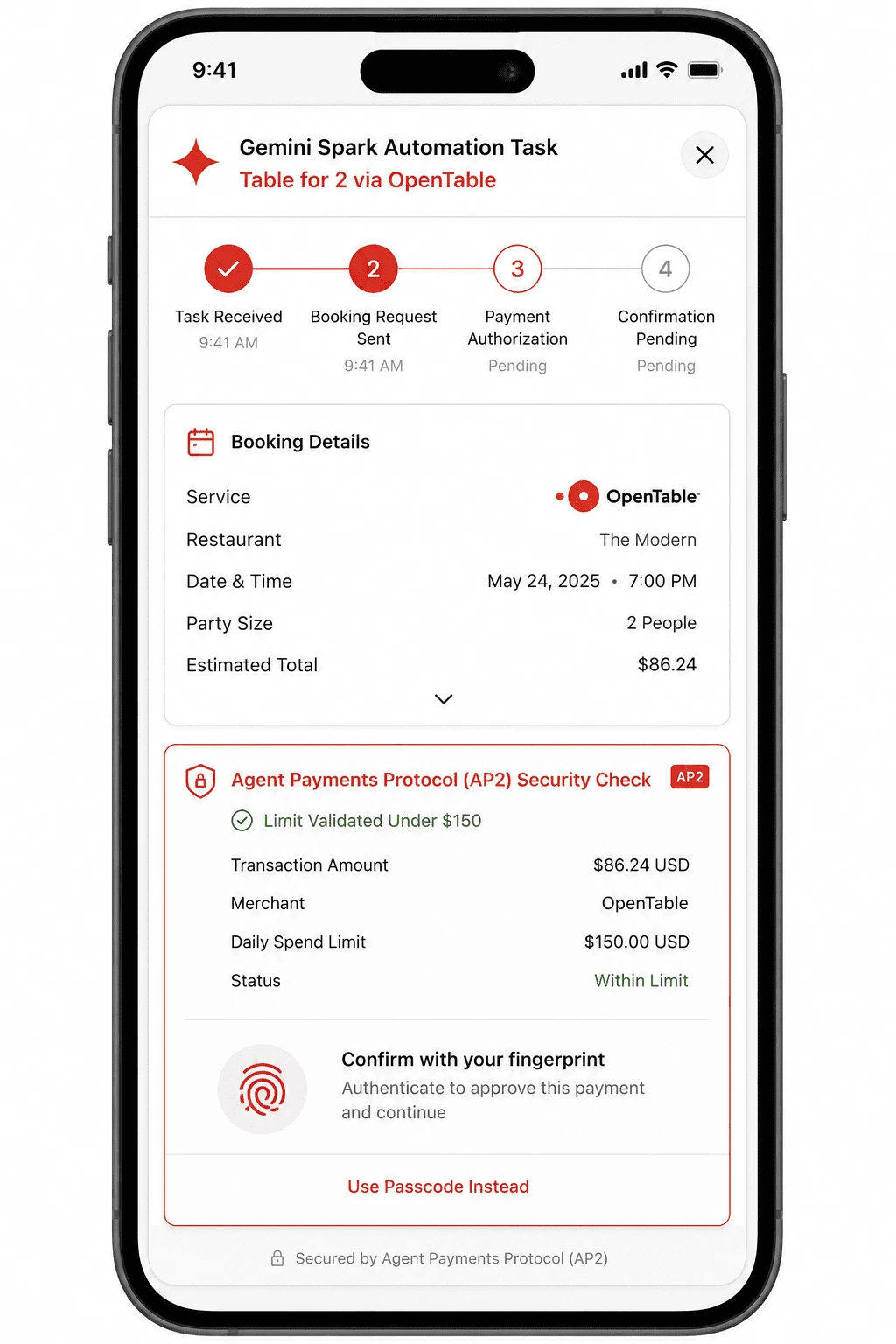
To safely delegate transactional authority to an autonomous agent, Google co-developed and launched the **Agent Payments Protocol (AP2)** framework. This security protocol creates a secure link between user accounts, digital merchants, and connected credit cards via Google Wallet. To prevent an autonomous agent from overspending or accessing unintended services, users can establish strict digital boundaries.
For example, you can authorize Spark to book a dinner reservation, but cap the budget at $150 and restrict the merchant selection to a pre-approved list. Under the hood, the protocol generates tamper-proof digital mandates. High-stakes operations—such as processing a payment or broadcasting a mass email—require confirmation through a smartphone biometric prompt before execution.
Technical Specifications:
- Operational Infrastructure: Cloud-native multi-threading powered by the Antigravity system framework.
- External Connectivity: Model Context Protocol (MCP) standard integration with support for over 30 launch partners including Adobe, Canva, Lyft, and Dropbox.
- Security Architecture: Encrypted using privacy-preserving hardware enclaves with fully auditable digital logging trails.
Pros:
Executes tasks continuously when your laptop is shut; direct native hooks into your Google Workspace data footprint; highly secure transactional boundaries via AP2.
Cons:
Initially locked behind a premium $100 per month Google AI Ultra subscription tier; rollout limited to US regions for the early beta phases.
Best For: Busy professionals, executives, and e-commerce operators who need an autonomous personal assistant to manage complex digital schedules, monitor multi-platform communications, and track operations.
3. The Creative Frontier: Gemini Omni
On the creative side, Google unveiled Gemini Omni, a powerful next-generation multimodal world model. Developed by merging technologies behind specialized creative engines like Veo and Genie, Omni treats video generation not as a statistical sequencing of frames, but as an interactive simulation of physical reality.
The model displays a highly sophisticated grasp of real-world physical concepts—including complex fluid mechanics, lighting source reflections, and gravitational momentum. This allows creative teams to build or modify high-fidelity video projects through natural language instructions. By processing text, audio, and visual references simultaneously, Gemini Omni maintains flawless scene composition, spatial geometry, and character continuity across multiple cut changes.
Technical Specifications:
- Cross-Modal Processing Engine: Single unified neural network processing image files, ambient audio tracks, and reference videos simultaneously without conversion loss.
- Distribution Channels: Native integration across YouTube Shorts, YouTube Create, and the core creative app Google Flow.
- Model Variants: Launches with Gemini Omni Flash for rapid generation pipelines, with high-definition rendering versions rolling out to enterprise tiers later this month.
Pros:
Flawless visual consistency across sequential scenes; native audio generation matched directly to visual action points; intuitive conversational adjustments.
Cons:
High server processing overhead can result in rendering wait times for exceptionally long or complex prompt structures.
Best For: Digital marketers, video editors, YouTube creators, and advertising groups who need to produce high-end visual campaigns quickly without typical modeling glitches.
4. The Ambient Interface: Android XR Smart Glasses
The final pillar anchoring this product ecosystem is a significant hardware step into spatial computing: Android XR Smart Glasses. Developed through a close alliance with Samsung, Warby Parker, and Gentle Monster, this eyewear line moves AI out of desktop computers and straight into ambient physical spaces.
The first production run hitting retail markets later this year focuses heavily on real-time spatial voice interactions. Equipped with low-profile spatial cameras, lightweight microphone arrays, and open-ear speakers, the glasses allow the Gemini engine to see and hear what you experience throughout the day. Wearers can look at a broken mechanism or foreign sign and receive real-time repair guidance or instant language translations overlaid via audio feeds.
Technical Specifications:
- Operating Architecture: Android XR lightweight wearable runtime platform.
- Optical Hardware: Micro-camera arrays engineered for contextual scanning and object indexing.
- Acoustic Systems: Custom directional microphone arrays paired with open-ear bone conduction sound modules.
Pros:
Lightweight frame design built for all-day comfort; seamless ambient hands-free access; elegant style options provided by consumer optical brands.
Cons:
Early production runs depend entirely on a local wireless Bluetooth tether to an active Android smartphone or nearby data connection.
Best For: Logistics staff, maintenance technicians, traveling professionals, and tech enthusiasts looking for an unobtrusive, hands-free personal assistant interface.
Comparative Matrix: Evaluating the New AI Framework Ecosystem
Review the comprehensive breakdown below to understand the operational trade-offs across Google’s newly introduced toolsets:
| System Innovation | Core Architecture | Primary Operational Advantage | Access Path |
|---|---|---|---|
| Gemini 3.5 Flash | 2M token context, high TPS optimization layer. | Four times faster execution speeds across search and coding tasks. | Free tier public release; global Google AI Studio API. |
| Gemini Spark | Cloud-persistent multi-threading running 24/7. | Executes background processes and transactional actions while devices are off. | Google AI Ultra subscription ($100/mo). |
| Gemini Omni | Unified cross-modal world rendering physics mesh. | Flawless scene, lighting, and character consistency in video editing. | Google Flow integration; YouTube creator tools. |
| Android XR Glasses | Low-profile ambient wearable platform array. | Hands-free spatial context recognition and auditory guidance. | Commercial retail release launching Q4 2026. |
Answering Optimization: Overcoming the AI Overview CTR Drop
This systematic move into ambient computing and background execution sheds light on why mainstream content sites are dealing with a severe, structural **AI Overview CTR Drop**. When a user relies on a cloud assistant like Gemini Spark to parse records, or speaks to their Android XR Smart Glasses while working on a project, they completely bypass traditional web browsers.
The consumer doesn’t navigate search listings, scroll past display ads, or land on external technical blogs. Google’s internal agent reads the open web data index, extracts the single most accurate, structured answer block, and presents it as an inline audio or visual summary. To keep your company’s digital properties discoverable in this zero-click agent economy, adapt your technical content formatting using these structural rules:
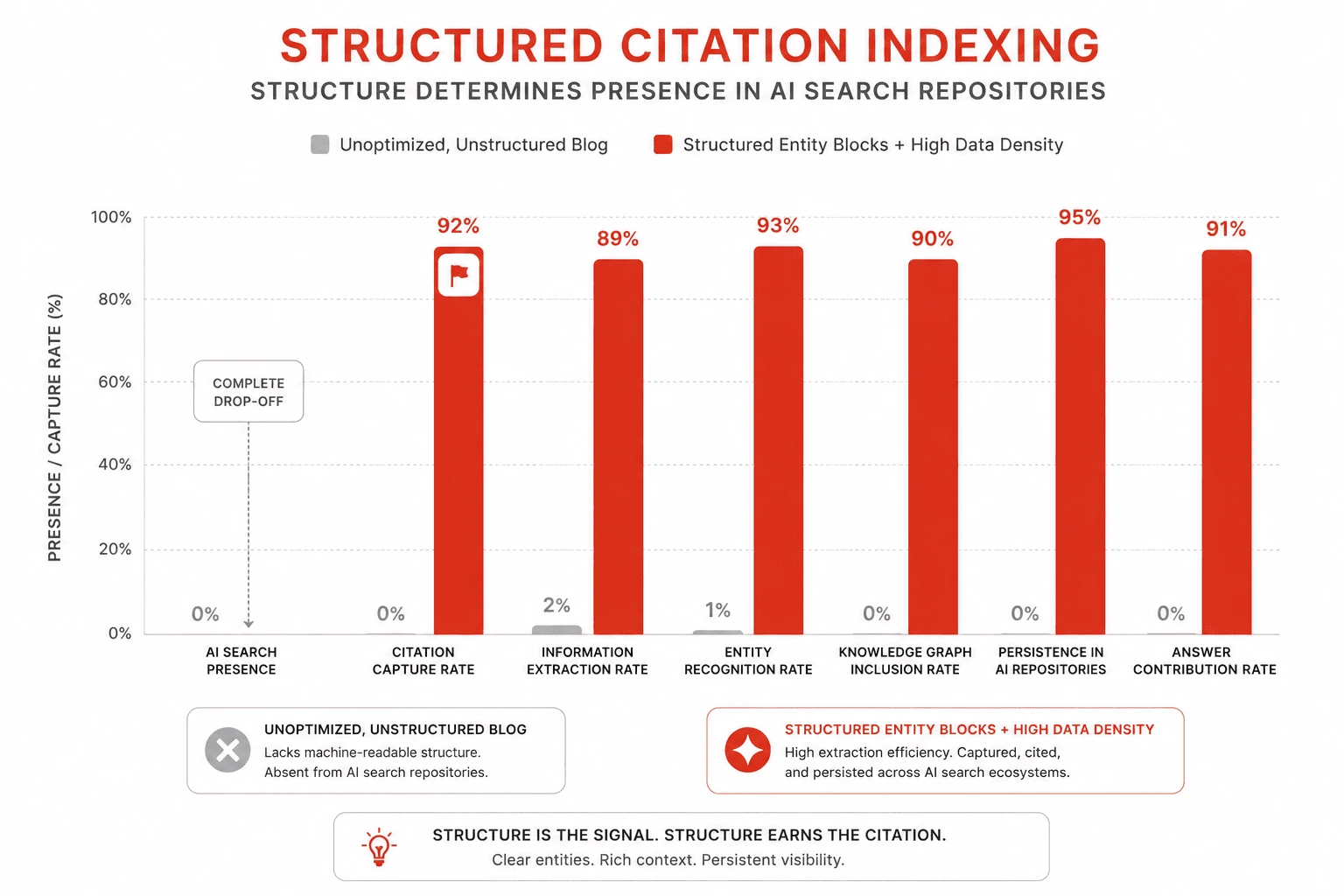
- Structure Content Around API Contracts: Design web pages like clean documentation interfaces. Ensure data arrays, technical specifications, and setup sequences are clearly organized using explicit HTML data matrix configurations. This makes your resource content easy for background processes to index and cite.
- Maintain High Information Density: Generic, AI-written marketing copy will be summarized away by Google’s low-latency models without receiving any citations. Focus your resource pool on primary test findings, unique engineering challenges, or first-hand troubleshooting logs that search engines cannot simulate on their own.
- Expose Model Context Optimization Parameters: Format your data grids to ensure that conversational assistants running on the Model Context Protocol (MCP) framework can accurately scan and locate your brand properties instantly during comparative shopping evaluations.
Frequently Asked Questions: Decoding Google’s New System Ecosystem
Q1: How does Gemini 3.5 Flash lower overall developer API computing costs?
Gemini 3.5 Flash implements advanced distillation layouts and architectural cache systems that reduce the processing load needed to evaluate extensive instruction chains. This allows enterprise engineering groups to run long-context applications, code pipelines, and real-time agent tasks at a fraction of the cost of previous models.
Q2: Can the Gemini Spark AI Agent make purchases without my explicit knowledge?
No. Under the newly deployed Agent Payments Protocol AP2 architecture, security parameters are strictly locked by default. The system cannot initiate financial transactions without explicit user authorization. High-stakes actions, such as sending emails or completing payments, prompt a biometric confirmation check on your paired device before executing.
Q3: What makes Gemini Omni different from alternative AI video generation tools?
Most AI video generators create video clips one frame at a time based purely on text descriptions, often leading to visual glitches and warping. Gemini Omni functions as a unified world model, processing text, audio, and visual references simultaneously. This allows it to grasp real-world physical concepts like light and momentum, maintaining perfect character and scene consistency across cuts.
Q4: Do the new Android XR Smart Glasses require an active cellular subscription plan?
Early hardware configurations run through a wireless low-power Bluetooth connection to a paired smartphone. The glasses rely on the host device’s local network connection to process contextual voice questions through Google Cloud’s AI engine.
Conclusion: Structuring Your Strategy for the Agent Era
The Google I/O 2026 AI Announcements prove that the technology sector has shifted permanently away from standalone software tools. The emergence of persistent personal assistants like Gemini Spark and ambient hardware interfaces like the Android XR glasses marks the beginning of an era built around automated execution networks.
While this evolution threatens legacy web traffic models, it creates massive opportunities for teams that adapt quickly. By structuring your technical platforms to support automated data ingestion and using clean, machine-readable formats, you can ensure your business properties remain a foundational citation source in Google’s newly expanded agent ecosystem.