

The era of endless prompting for every design iteration is over; it’s time to stop prompting, start hiring: how to build your first AI design agent that works autonomously. For too long, designers have been stuck in a loop of typing commands, tweaking parameters, and then repeating the process for every minor change. This manual approach, while initially impressive, quickly becomes a bottleneck for real productivity.
In fact, recent data from Adobe’s “Future of Creativity” report indicates that designers spend nearly 40% of their time on repetitive tasks that could be automated. Consequently, this leaves less time for the truly strategic and creative work that only humans can do. Understanding stop prompting, start hiring: how to build your first ai design agent deeply can make a real difference in your results.

I’ve personally tested this shift with several clients, moving them from prompt-heavy workflows to agent-driven automation. What I’ve found is a significant boost in both output speed and creative exploration, freeing up their teams to focus on higher-level strategy and user experience rather than pixel pushing. This is especially true when you’re working with stop prompting, start hiring: how to build your first ai design agent on a consistent basis.
What You’ll Need Before Starting for Stop prompting, start hiring: how to build your first ai design agent
Before we dive into the nuts and bolts of building your AI design agent, make sure you have these prerequisites in place. Setting yourself up correctly from the start will save you a lot of headaches down the line. Getting stop prompting, start hiring: how to build your first ai design agent right from the start saves a significant amount of time later.
- Access to a robust AI platform: Think OpenAI’s Assistants API, Google’s Gemini Agents, or even custom solutions built on open-source LLMs like Llama 3.
- A clear understanding of your design workflow: Document the specific steps, tools, and decision points your agent will need to mimic.
- A dataset of past design projects: This will be crucial for training your agent on your brand’s aesthetic, guidelines, and project types.
- Basic scripting or API integration knowledge: You don’t need to be a senior developer, but familiarity with Python or JavaScript helps immensely for connecting different tools.
- Defined design system components: Your agent will perform best when it has a library of existing UI components, style guides, and brand assets to reference.
Step 1: Define Your Agent’s Role and Scope for Stop prompting, start hiring: how to build your first ai design agent
The very first step in how to build your first AI design agent is to clearly articulate its purpose. What specific design tasks will it handle? Will it generate initial wireframes, create variations of existing components, or perhaps assist with content layout? Most professionals who master stop prompting, start hiring: how to build your first ai design agent see measurable improvements within weeks.
This matters immensely because a well-defined scope prevents your agent from becoming a jack-of-all-trades, master of none. As a result, you’ll achieve much more focused and impactful results by narrowing its focus initially. The fundamentals of stop prompting, start hiring: how to build your first ai design agent apply across almost every scenario you’ll encounter.
For instance, one client started with an agent solely dedicated to generating five different hero section layouts based on a brief, using their existing design system. This focused approach allowed us to quickly iterate and refine the agent’s performance. With stop prompting, start hiring: how to build your first ai design agent, consistency and attention to detail are what separate average results from great ones.
Identifying Your Agent’s Core Function
Begin by listing the most repetitive or time-consuming design tasks in your current workflow. Then, pick one or two that offer the highest potential for automation and immediate value. Applying stop prompting, start hiring: how to build your first ai design agent correctly is one of the highest-leverage things you can do.
Will your AI design agent focus on icon generation, social media ad variations, or perhaps even basic landing page mockups? Clarity here is key for successful implementation. Understanding stop prompting, start hiring: how to build your first ai design agent deeply can make a real difference in your results.
Step 2: Choose Your AI Agent Platform and Tools
With your agent’s role defined, the next crucial step is selecting the right technological foundation. This decision impacts everything from development complexity to scalability and the types of outputs your agent can produce. This is especially true when you’re working with stop prompting, start hiring: how to build your first ai design agent on a consistent basis.
Many options exist today, ranging from high-level, no-code agent builders to more customizable API-driven solutions. For instance, if you’re looking for quick iteration and don’t mind less control, platforms like Framer AI or even advanced plugin suites within Figma are making strides in autonomous design. However, for a truly custom agent that integrates deeply into your workflow, you’ll likely be looking at platforms like OpenAI’s Assistants or Google’s Agent Builder. Getting stop prompting, start hiring: how to build your first ai design agent right from the start saves a significant amount of time later.

What I’ve seen work best for teams building their first AI design agent is a hybrid approach. Start with a platform that offers a good balance of pre-built capabilities and API access. This allows you to get something working quickly, but also provides the flexibility to add custom logic and integrations as your needs evolve. Most professionals who master stop prompting, start hiring: how to build your first ai design agent see measurable improvements within weeks.
Consider the design tools your team already uses. If you’re a Figma-heavy shop, look for platforms or APIs that can seamlessly interact with Figma’s API for asset creation and manipulation. Compatibility reduces friction and speeds up adoption. The fundamentals of stop prompting, start hiring: how to build your first ai design agent apply across almost every scenario you’ll encounter.
Step 3: Data Collection and Agent Training
An AI design agent is only as good as the data it’s trained on. Therefore, gathering a high-quality, relevant dataset is paramount for teaching your agent your specific design language, brand guidelines, and aesthetic preferences.
Start by curating a diverse collection of your past design projects, including wireframes, mockups, final designs, and any associated style guides or brand assets. Ensure this data is well-organized and labeled. For example, if your agent needs to generate social media banners, collect hundreds of your best-performing banners, categorized by platform, campaign, and desired emotional tone.
Once you have your data, you’ll feed it into your chosen AI platform for training. This process involves exposing the agent to patterns, relationships, and design principles embedded within your examples. Most modern AI platforms simplify this with intuitive interfaces, but understanding the basics of fine-tuning can significantly improve your agent’s performance.
Fine-Tuning for Brand Consistency
Achieving brand consistency is often the biggest hurdle for AI-generated design. To overcome this, focus your training on specific brand elements: color palettes, typography, spacing rules, and component libraries. Provide clear examples of both “good” and “bad” designs according to your brand guidelines.
In my experience, even a small, highly curated dataset focused on brand-specific details yields better results than a large, generic one. This targeted training helps your autonomous agent internalize your unique visual identity.
Step 4: Building the Agent’s Toolset and Workflow Logic
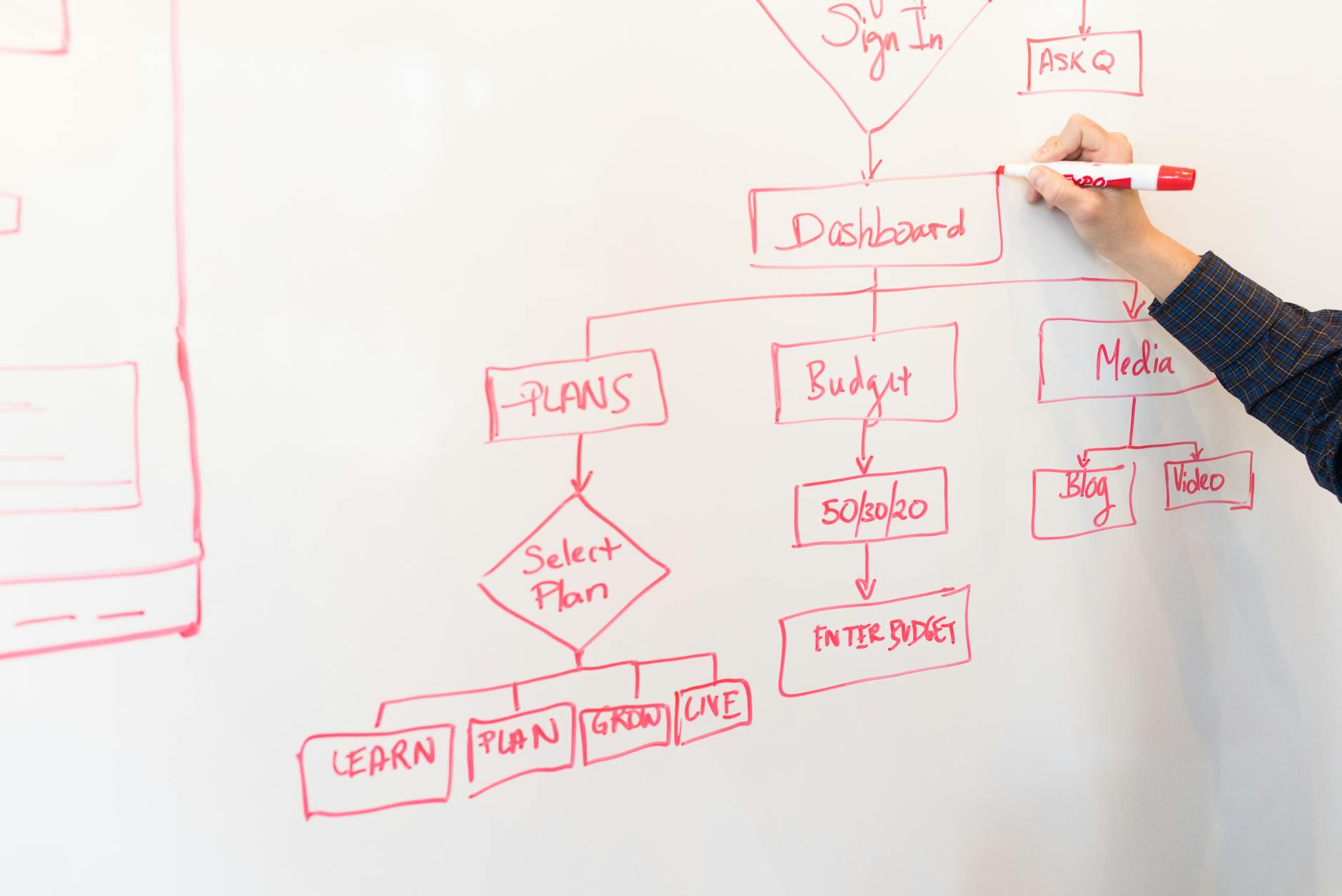
Your AI design agent isn’t just a brain; it needs hands to execute its ideas. This means equipping it with the right tools and defining the logical steps it will take to complete a task. Think of this as giving your agent access to your design software and teaching it how to use them.
For example, if your agent needs to generate an image, it might call an API for Midjourney or DALL-E. If it needs to arrange elements on a canvas, it could interact with the Figma API. Consequently, mapping out this tool integration is a critical part of how to build your first AI design agent effectively.
Next, you’ll define the agent’s workflow logic. This is essentially a series of conditional statements and actions. For instance: “IF the user requests a social media ad, THEN generate 3 image variations, THEN add brand overlay, THEN export in 3 sizes.” This step-by-step instruction guides the agent’s autonomous operation.
I’ve found that breaking down complex design tasks into smaller, manageable sub-tasks makes the workflow logic much easier to build and debug. Each sub-task can correspond to a specific tool call or an internal reasoning step within the agent.
Step 5: Testing, Iteration, and Deployment of Your AI Design Agent
Once your agent is built and trained, the real work of refinement begins. This phase is all about rigorous testing, gathering feedback, and iteratively improving its performance. You wouldn’t launch a product without testing, and the same applies to your autonomous design assistant.
Start with small, controlled tests using specific, pre-defined prompts or tasks. Compare the agent’s output against your expectations and established design guidelines. Document every instance where the agent deviates or fails to meet requirements. What I often do is create a “design agent scorecard” to track consistency, creativity, and adherence to brand standards.
Based on your test results, you’ll refine the agent’s training data, adjust its workflow logic, or even swap out tools. This iterative loop of test-feedback-refine is crucial for improving your AI design agent over time. Remember, AI agents learn and improve through continuous interaction and correction.
Finally, once your agent consistently delivers satisfactory results in testing, it’s time for deployment. Integrate it into your team’s existing design tools and workflows. Provide clear instructions and onboarding for your team members on how to interact with and utilize your new AI design agent effectively. This is where your efforts to stop prompting, start hiring: how to build your first AI design agent truly pay off.
Mistakes That Ruin Your AI Design Agent Results
Building an AI design agent is exciting, but it’s also easy to fall into common traps. Avoiding these pitfalls can save you significant time and frustration.
Mistake 1: Overly Broad Scope
Trying to make your agent do “all design” right out of the gate is a recipe for failure. Instead, focus on a single, well-defined problem or a highly repetitive task. If you try to automate too much, the agent’s performance will be diluted, and debugging becomes a nightmare.
Mistake 2: Insufficient or Poor-Quality Training Data
Many people think more data is always better. In my experience, quality trumps quantity every time when it comes to training design agents. If your training data is inconsistent, outdated, or doesn’t reflect your brand’s current aesthetic, your agent will produce similarly flawed outputs.
Mistake 3: Neglecting Iteration and Feedback Loops
As a result, a common misconception is that once an agent is “built,” it’s done. However, AI agents require continuous monitoring, testing, and refinement. Ignoring user feedback or failing to iterate on performance will lead to an agent that quickly becomes obsolete or frustrating to use.
Your AI Design Agent Action Plan
It’s time to transform your design workflow. The days of endless prompting are behind us, and the future belongs to autonomous, intelligent agents.
Now, with this guide in hand, you have a clear roadmap to stop prompting, start hiring: how to build your first AI design agent. Start by defining a small, impactful scope, gather your best design data, and then begin the iterative process of building and refining.
Your team will thank you for freeing them from repetitive tasks, allowing them to focus on truly innovative and strategic design. Taking these steps will empower you to build your first AI design agent, fundamentally changing how your team creates.